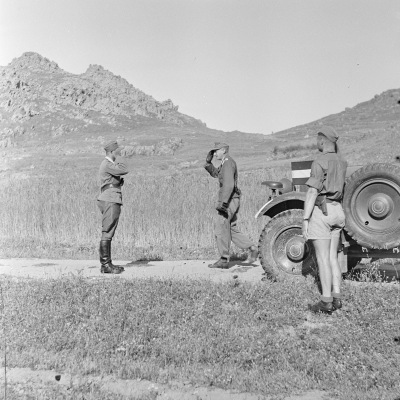
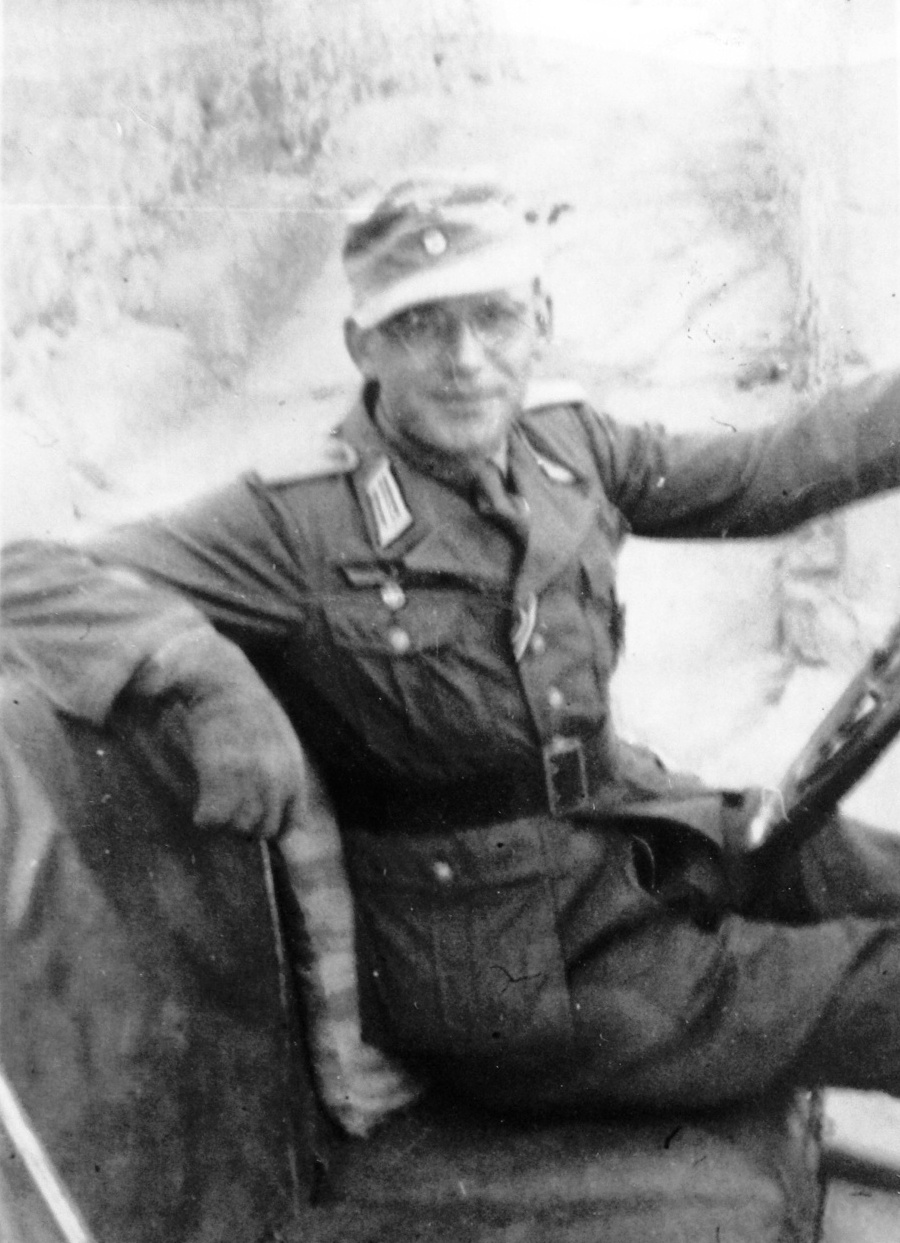
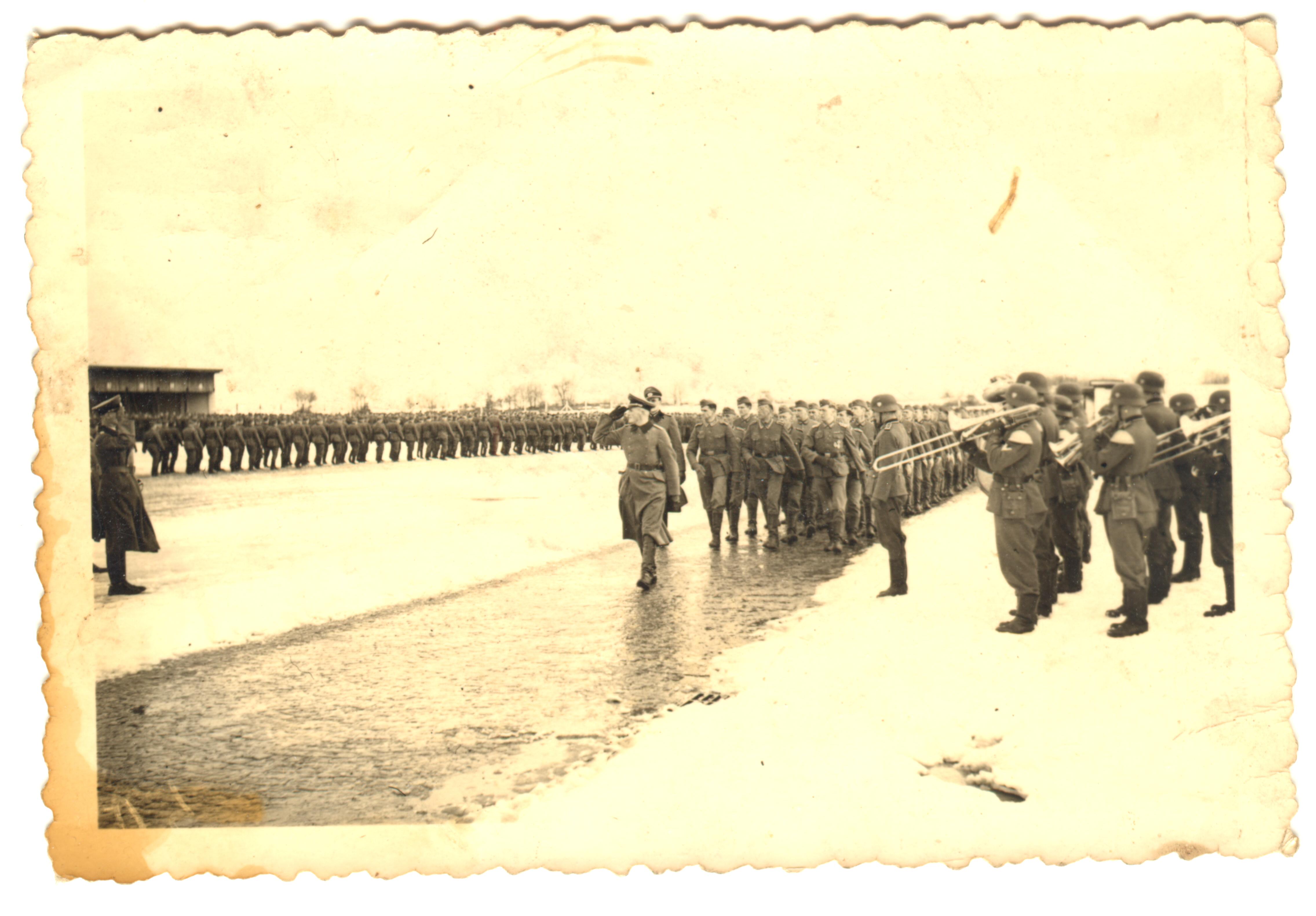
Hans Herrmann, Flak-Lehr-Regiment, Greece/Crete 1941

Note: All photos have private copyright. Please ask permission before re-using or at least mention the source as https://ww2placesobjectsfamily.wordpress.com Thank you!

Athen 1941

My great-uncle Hans Herrmann (13 March 1915 – 3 November 2003), then still a
first lieutenant (Oberleutnant), was in Greece with the “Flak-Lehr-Regiment” or “anti-aircraft training regiment”. He told me a few things about it, but I would like to learn more about the unit and its deployment in Greece, and I hope that others online on wordpress or other fora might also find this interesting.

Hans Hermann was battery commander in the II. Abteilung of the Flak-Lehr-Regiment from autumn 1940 to spring 1942. With this unit, after home-front defensive positions near Regensburg (Weissenburg) and Hamburg, which involved training new recruits, and a short stint in France in June 1940, he was first deployed to Romania (Ploeszti to defend the oil refineries there), then to Greece (April-May 1941). The initial plan had actually been to be sent to Afrika, and the units were equiped for the “tropics”… but they were diverted for Hitler’s move on Greece. Hans Herrmann was meant to land in Crete in May 1941 in connection with Operation Mercury (Merkur). However, I know from his stories that he was lucky because the small fishing steamboat on which he and his anti-aircraft guns were being transported to Crete had to turn back due to a mechanical problem… that probably saved his life, because most of the other boats were sunk!
He still received his Crete sleeve insignia afterwards, which I now have!

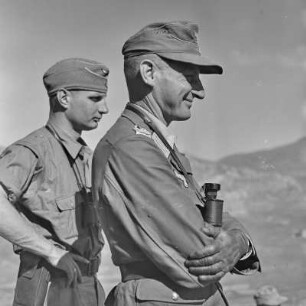
Below: a photo of Oberleutnant Herrmann (centre-left) with fellow officers of the II./Flak-Lehr-Regiment at their camp by the beach near Saloniki. May 1941. Centre-right, Major Wolfgram? First left (right-side of H. Herrmann) seems to be Leutnant Dahms.

According to the application letter Hans Herrmann wrote in 1955 to join the Bundeswehr, the commanders of the II. Abt./Flak-Lehr-Regiment during that period (autumn 1940 to spring 1942) were first Major Wolfgram and then Major Lyneker. However, I do not have the exact date of the change of command. Apart from Major Wolfgram (apparently the tactical symbol of the unit, a wolf, was chosen after his surname!), he also often mentioned Lieutenant Dahms. They also appear in photos from that time. The famous greek-german military historian, Byron Tesapsides (RIP), had informed me privately that according to his archival research Major Wolfgram and Lieutenant Dahms both died during the crossing to Crete with the ship squadron. This corelates with what my great-uncle had told me during interviews I carried out with him in the 1990s.

Losses of the II. Abteilung/Flak Lehr-Reg. (2nd battalion/Anti-Aircraft Training Regiment), among others:
– Commander, Kdr. (commander) Major Erich Wolfgram, (deceased 21 May 1941), – Adjutant, Lt. Hermann Dahms, (deceased 21 May 1941), – Battalion medic (Btl.Arzt, O.Arzt), Dr. Johannes Thies, (deceased 21 May 1941). – Oblt. Götte, commander of the 10th battery (same date?)

Dr. Thies was burried at the German military cimetery of Maleme (Bloc 2 tumb 255). The bodies of Major Wolgram and Lt. Dahms could not be retrieved (lost at sea, they are officially still reported as “missing”).

Apparently Hans Hermann commanded the 10th Batterie, or maybe first he commanded one of its platoons/Züge until Oblt. Götte’s death and then took over the Batterie-command as Byron Tesapsides based on the field-postcode “Feldpostnummer30638). Perhaps others reading this can help with some of this (more details on Oblt. Götte?) and also with the various locations of the II. Abteilung of the Flak Lehr-Reg. My great-uncle mostly mentioned Saloniki, Athens and Chalkis…

I attach here and in the link below a scanned copy of a document (in German) about the operation ‘MERKUR’/Invasion of Crete, which my great-uncle Hans Hermann
gave me in the 1990s. Unfortunately, it is not dated (or signed by name), and I am not sure whether the “Deutsches Luftwaffenübungsplatz-kommando Suda Bucht” or “German Air Force Training Area Command Suda Bay” already existed during the war
or whether it only refers to the later NATO training base established there with participation of the post-war Luftwaffe of the Federal Republic of Germany.

I think I remember my great-uncle mentioning he received this document after the war,
either in his capacity as a Bundeswehr officer or through contacts in the circle of his former comrades of the II./Leichte Abteilung of the Flak-Lehr-Regiment.
The events concerning the sea transport and the II. Schiff-Staffel are mentioned on pages 25-29 (with a photo by Hans Hermman attached).

The link to the document:
https://ww2placesobjectsfamily.wordpress.com/wp-content/upl…merkur-1941.pdf

I would very much like to hear from specialists or anyone with an interest on the Crete-invasion and have opinions on this document and also anything you might know about the ‘German Air Force Training Area Command Suda Bay’!

Massive ship explosion in the port of Piraeus, Athens Mai 1941

In 1988, when he was 73, Hans had told me of his witnessing of the huge explosion of a ship in the harbour of Athens, believed by him to be due to sabotage actions by resistance or a special comando. Years later he unearthed his old war-time photographs and handed them over to me. To my surprise, with a stack of photos and corresponding negative rolls of May and June 1941, there was this photo corresponding to that very event:

Hans’ war-time handwritten comment on the back of the photograph reads “Explosion of an ammunition supply ship, by partisans? Athens 1941.”

Trying to find out more discussing this with specialists, late Aeagean WWII historian Byron Tesaspsides (see Forum der Wehrmacht thread from 20 June 2017) had clarified to that there was no partisan activity yet mid-1941, and that this was probably the Bulgarian cargo “Maria Luise” which exploded after a fire on board set off the explosives, ammunition and petrol/gasoline stocked on board (what a mix to be transporting!). Three other boats were damage and sunk as a consequence of that explosion).

Lemnos/Limnos island

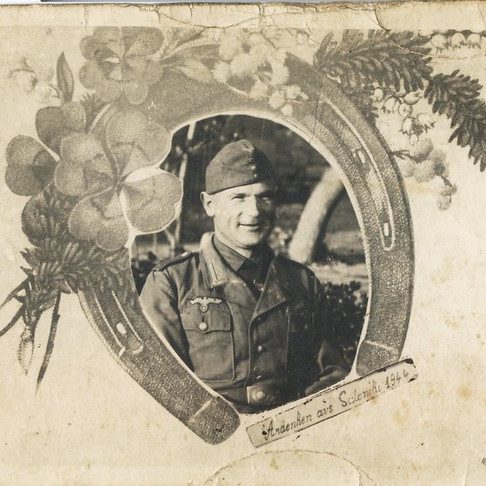
Leutnant Ludwig Preller in Greece, 30 April 1944.

 In 1943-44 my grandfather Lt. Ludwig Preller (1918-1945?) was stationed on the island of Lemnos with the V./Festungs Infanterie Bataillon 999, that unit being part of the Festungs Infanterie Regiment 963 (Fstg.Inf.Rgt. 963) under the command of Oberstleutnant Clotz (Rgts.Kdr. Obstlt. Clotz), later Oberst Clotz when the regiment was upgraded for Festungs Infanterie Brigade 963 (also known as ‘Brigade Clotz’).

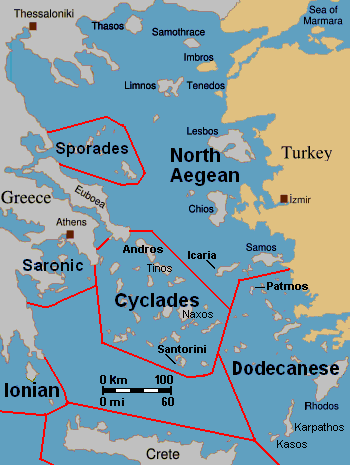
"Aegean_Sea_with_island_groups_labeled"
"Ludwig

Leutnant Ludwig Preller in Greece, 30 April 1944.


Aegean_Sea_with_island_groups_labeled

Situated in the  Northern Aegean, the island (see map) played an important role during World War I for the Allies’ Dardanelles campaign, as the bay of Moudros served as a base for allied ships in the battle of Galipoli. This place if of particular national commemorative significance to Australian and New Zealand families of the ANZAC soldiers and nurses who participated in this campaign.

myrina-18
View of Myrina (formerly Kastron) bay today seen from the castle ruins (credit Vasilis Protopapas, source: http://www.poseidonlemnos.gr)

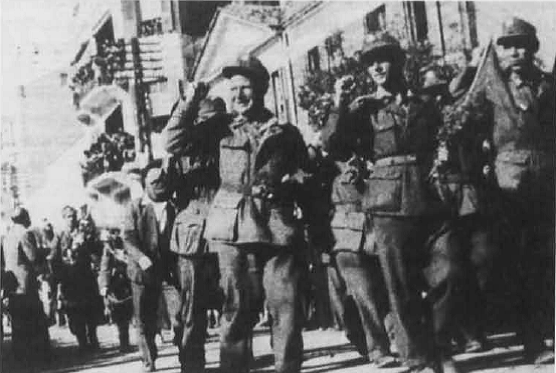
During WWII, the island was occupied by the Germans on 25 April 1941, in the wake of the Wehrmacht’s invasion of Greece, by the Infanterie Regiment 382/164 Inf.Division under the command of Oberst Wilhelm-Helmuth Beukemann (see corresponding thread in the ‘Forum der Wehrmacht‘). The same bay of Moudros served as a base for German ships controlling the northern Aegean sea.

limnos252c2bgerman2boccupation2b1941
German troops marching through Myrina (Kastron), Lemnos’ capital, 25 April 1941 (Web)

I found this rare photograph (on the forum MapleLeafUp) of the truck used by the Hafenkommandant of Kastron (today Myrina) on Lemnos, which is a captured British vehicle.

attachment
“Showing Morris-Commercial CS8 Z389950 picked up from the battlefield and put to use as a harbour command’s hack at Kastron, Isle of Lemnos, Greece, 1941”.

"Telecommunication Old army bunker on a hilltop in Lemnos, with telecommunications mast. Source: https://www.alamy.com/stock-photo-a-telecommunications-mast-on-a-hill-top-on-lemnos-greece-with-an-old-51228730.html

The end of the Afrika Korps and the Greek islands instead

In 1943, with the defeat of the Rommel’s Afrika Korps in Tunisia, the German High Command decided to reinforce the defenses of the Balkan coast-line including Northern Greece and the Peloponese islands. Rommel himself visited Saloniki in July 1943 to this purpose (see German propaganda film footage here). This is how many troops initially meant to be sent to Tunisia to bolster the Afrika Korps were then dispatched to Greece, including reinforcements for the Leichte Afrika Division. This explains the Afrika Korps “Troppen-Uniform” and equipment used by the units in the area.

This is also the period when the so-called “punishment-bataillons” were sent from Heuberg to Saloniki and the Peloponese islands, including the 963 Afrika Schutzen Regiment sent to Lemnos.The “999” punishment units in the Northern Aegean

Anti-nazi political prisoners as Wehrmacht soldiers!

As is well documented, the “999” units in Greece were composed of former-prisoners, both so-called common criminals (under the nazi definition for this, which included for instance homosexuals!) and political (roughly 50/50%), as also evidenced through information from my grandfather on the 963 Afrika Schutzen Regiment (see here). Among the ‘politicals’ quite a few (generally with a communist party, KPD, or Social Democrat, SPD, background) ended up going over to the Greek resistance movement ELAS.

Such was the case for instance of reknowned socialist jurist and political scientist Wolfgang Abendroth (1906-1985), an important contributor to the constitutional foundation of postwar West Germany.

a65-15
Abendroth before the war (credit: International Institute of Social History)

As a lecturer he oversaw the habilitation in political science of major German philosopher, sociologist, and political theorist Jürgen Habermas.

620
Wolfgang Abendroth (1906-1985).

His account of his period on Lemnos and how he went over to the Greek resistance movement in 1944 gives some interesting insights into the military-political conditions on the island.

From September 1944, the German forces progressively withdrew from Lemnos to the mainland via Thessaloniki. This was the case of my grandfather’s unit, the V./Festungs Infanterie Bataillon 999 which was transported to Thessaloniki beginning of September.

The island was liberated by the  British forces, or rather by the Greek Sacred Squadron/Regiment (or initially ‘Greek Sacred Band’) under the command of the British Raiding Forces on 16 and 17 of October 1944.

 Further Anti-Nazi resistance fighters in Lemnos

Kurt Bennewitz (shot by the SS in 1945 at Loiblpass)

Bernhard Sühlbrandt : Communist, went over to ELAS Greek resistance, seen in 1st November 1944 liberation Parade in Thessaloniki, see photo below – copy from Hans-Peter Klausch, 1986, Die 999er. Sühlbrandt is the last one on the right of the picture.

Deutsche beim ELAS paradieren in Saloniki in Klausch

(Under work…)

Adendum (31/08/2023): War Photographer Erich Rinka on Lemnos/Limnos

I recently discovered a new series of photographs taken by the war photographer Erich Rinka on Lemnos in 1943/44.

They can be found here on the German Digital Library:

But it never says which unit it is, less the names of the officers and rarely the places… hopefully someone knowledgeable seeing these could help identifying people and places!

Rinka, Erich: Griechenland. Insel Limnos. “Soldaten der Wehrmacht im Einsatz”, 1943/1944 Source: Deutsche Digitale Bibliothek

I am still trying to identify this officer who appears often in Erich Rinka’s photo series of Lemnos:

Rinka, Erich: Griechenland. Insel Limnos. “Soldaten der Wehrmacht im Einsatz”, 1943/1944 Source: Deutsche Digitale Bibliothek

Any held with the identification most welcome!

Further information on the Island of Lemnos:

Lemnos during WWI:

http://lemnosgallipolicc.blogspot.mx/2014_09_01_archive.html

On Wolfgang Abendroth:

http://www.barth-engelbart.de/?p=29092

https://socialhistory.org/en/collections/wolfgang-abendroth?language=nl

https://de.wikipedia.org/wiki/Wolfgang_Abendroth

http://www.spiegel.de/spiegel/print/d-46034494.html

http://www.spiegel.de/spiegel/print/d-13516517.html

http://www.gdw-berlin.de/en/recess/biographies/index_of_persons/biographie/view-bio/abendroth/

On British forces liberating the island:

Australian newspaper clip from 23 October 1944: http://trove.nla.gov.au/newspaper/article/11366819


Paros Island (and Milos)

During WWII, Paros Island was first occupied by the Italians in 1941 and then, with the surrender of Italy, by the German Wehrmacht from end of 1943 until October 1944. The main strategic objective to occupy the island was to build an airport there – a dire need for the supply of the German units scattered in the Aegean islands and beyond.

The German unit occupying the island from December 1943 was the Festungs Infanterie Bataillon 1010 ( Fstg.Inf.Btl.1010, St./1.-4. Kp.).

Although, my grandfather Lt. Ludwig Preller wasn’t in this unit (but the V./Festungs Infanterie Bataillon 999) he seems to have been stationed on the island of Paros for some reason or at least to have visited it regularly on duty from September 1943 to December 1943 at least.

Lt Preller in Paros Oct 1943

Lt Preller in Paros October 1943

Ludwig Preller, Dec.1943, Paros

Lt. Ludwig Preller, Paros, Dec. 1943

The Commander of the island was Major Georg Graf von Merenberg.

125 youths to be executed saved

Here is a very interesting story about what happened on the island during the war, the kind of story that makes you believe in humanity again:

http://www.lively-arts.com/humaninterest/2012/03/closed_circle_fs.htm

Photograph of Count von Merenberg, from http://www.lively-arts.com, courtesy of Dr Clotilde von Rintelen, Gräfin von Merenberg. Studio portrait taken 1943.

The commander Major von Merenberg was supposed to apply an order to execute 125 Paros youths in reprisal for the killing of a German soldier – it took some very diplomatic convincing from the Longuvarda monastery monks but he accepted to disobey the order.

Count Georg von Merenberg seems to have been quite a character!… and certainly not a staunch national-socialist, but very much a representative figure of the old Prussian military aristocracy… and with prestigious Russian descent, counting  the Russian Zar Alexandre II and the poet Pushkin among his forebears! Although, this wasn’t something to show-off in Nazi Germany…

In fact, his posting on Paros (to oversee the completion of a Luftwaffe airport and base) seems to have been a way to halt his military career – an officer of Prussian background with his trajectory would have had a much higher rank by that stage, had he been more sympathetic with the NS regime.

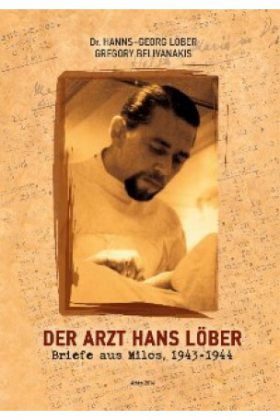
Another positive story: Hans Löber, the “Good medic” of Milos:

An interesting article in Cologne newspaper (2019) about this German military medic’s work healing local people: Hans Loeber Milos 1944

His son published his wartime letters from Milos in this book:

Hans Loeber Limnos

Rare  wartime colour photographs of Milos and Paros

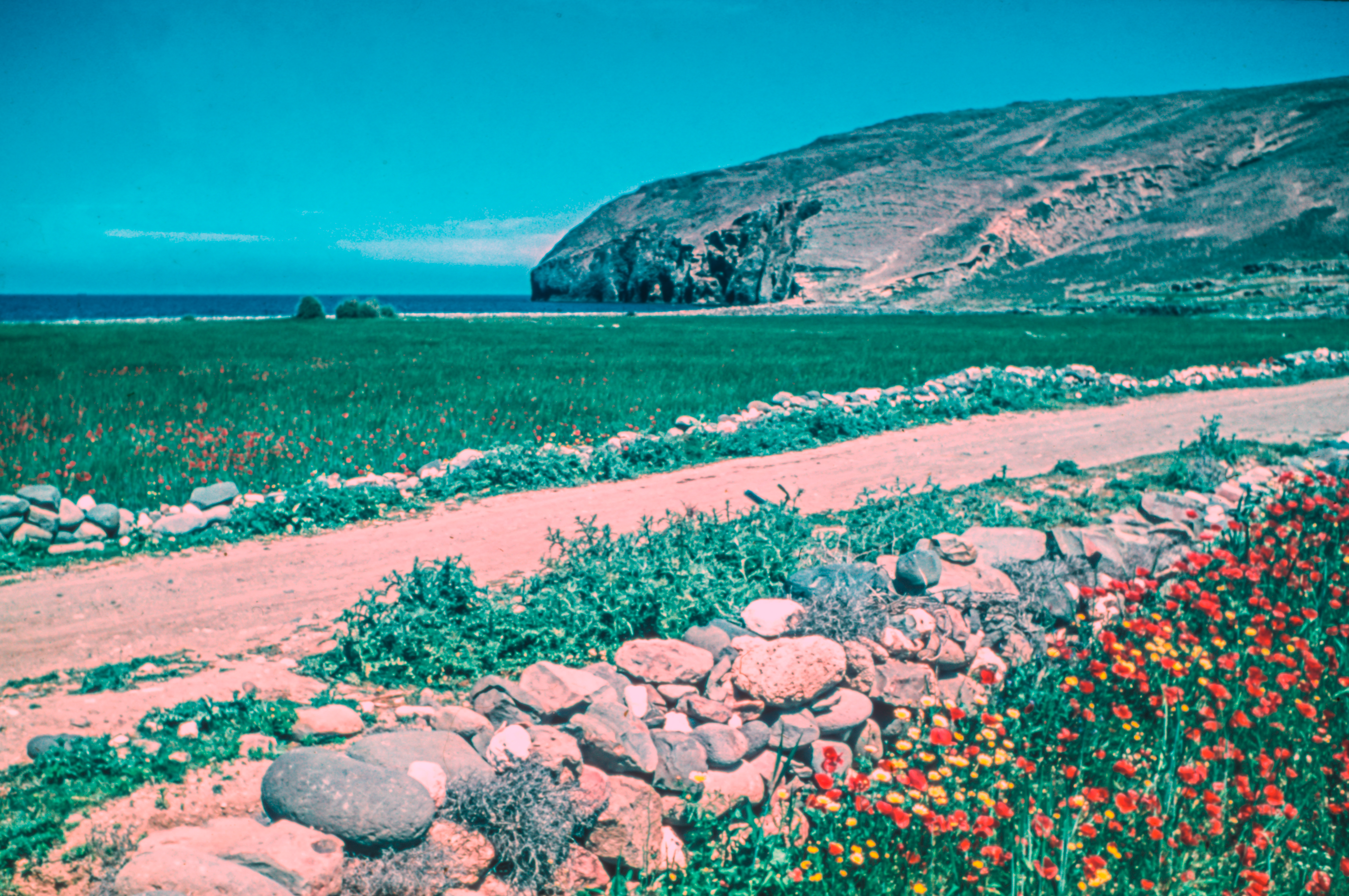
I also discovered this absolutely amazing series of photos of Milos and Paros in 1944, including colour shots (!!!) taken by a Grenadier, Albert Petersen, with an obvious talent and expertise for photography:

IMG_0001

Near Pollomia, Milos 1944. Foto Albert Petersen (with authorisation from L.Petersen)

These were initially on the Photo-platform Panoramio until this was shut down. I was able to get in touch with Albert’s son who very kindly provided me with copies of these.

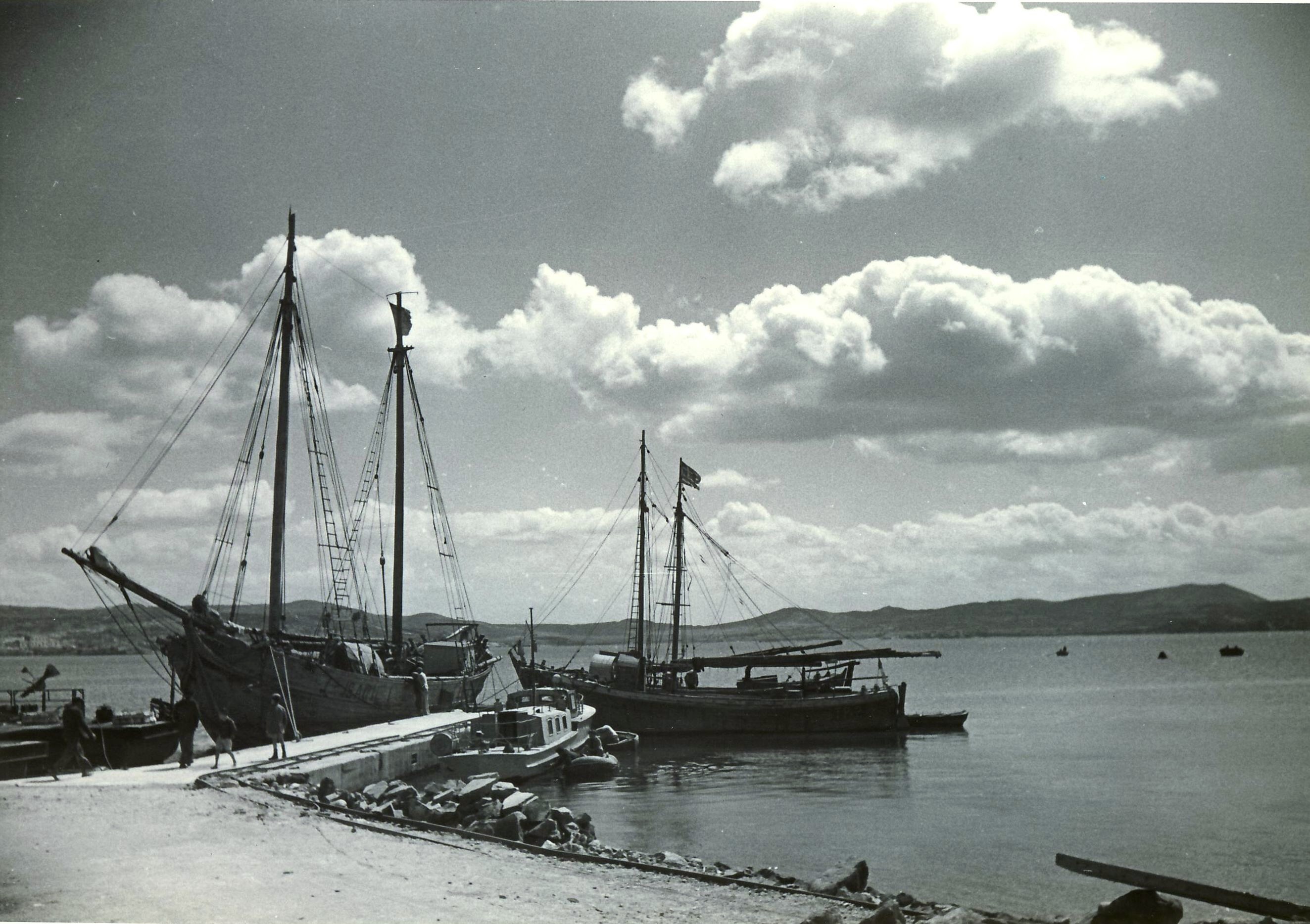
Hafen von Adamas

The harbour of Adamas. Photo A. Petersen (courtesy of L.Petersen)

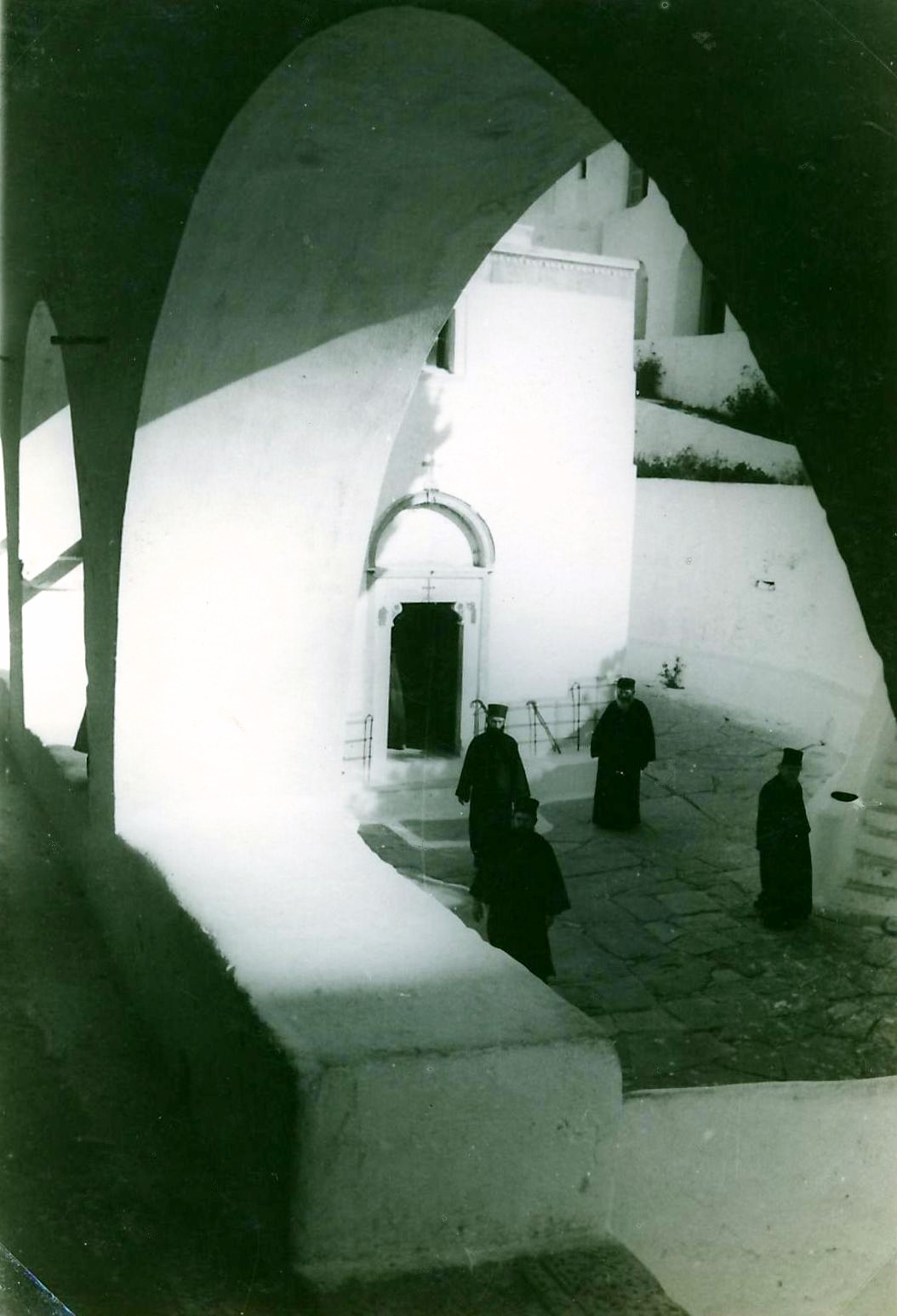
As his son explains in the comments, Albert Petersen wasn’t keen on the war, had very friendly relations with the islanders and ‘discharged himself’ from the Wehrmacht by taking refuge in  the Longuvarda monastery (the same one where G. von Merenberg was convinced not to execute 125 young Greeks in reprisal of the killing of German soldiers in a commando action).

Klosterhof Longuvarda 1944A_CC

Monastery Longuvarda, Paros, 1944. Photo taken by Albert Petersen, Courtersy of L. Petersen

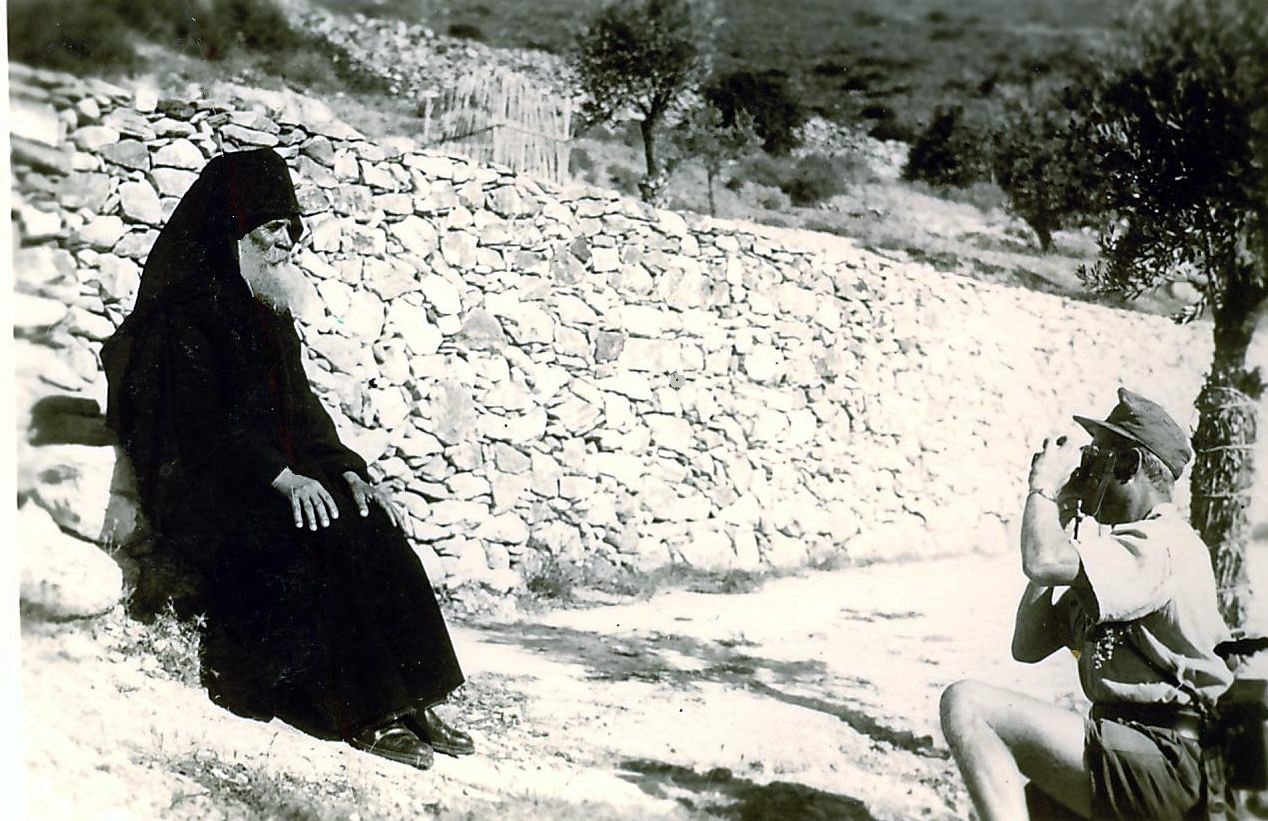
The initial Panoramia post came with an interesting explanation of the photographers’ trajectory and relationship to locals in comments to one of his pictures of Longuvarda monks:

5 - Albert fotografiert Mönch

Albert Petersen, taking photograph of a monk (court. L. Petersen)

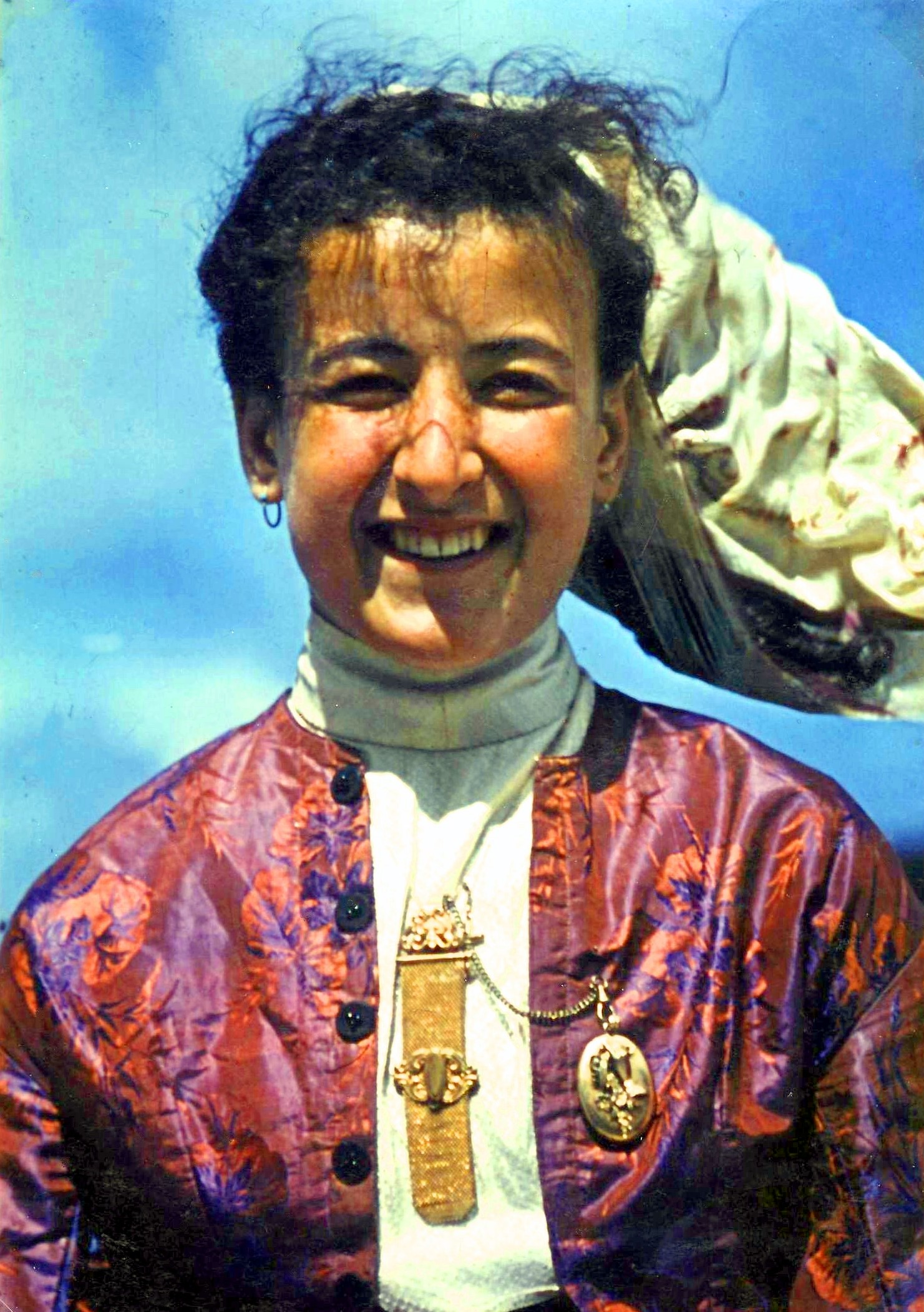
He also took  this beautiful picture of a young lady who he visited again after the war in the 1950s and who was still alive in 2010 and remembered the picture being taken of her:

58 - Stasia 1944_CC

A girl from Milos in traditional dress, 1944. Photo taken by Albert Petersen, courtesy of Lutz Petersen.

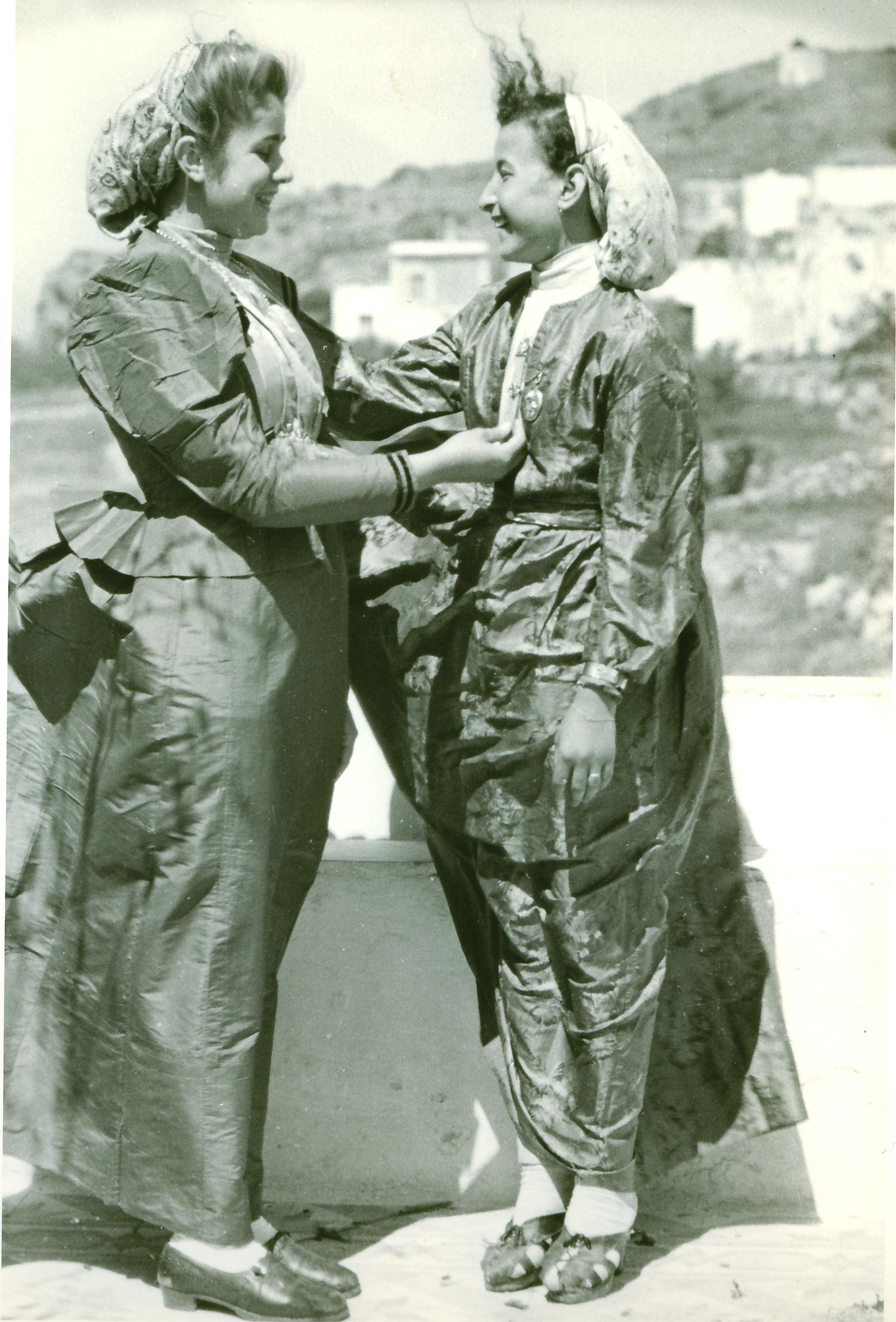
Argiro und Stasia auf Milos

Argiro and Stasia in Limnos (1944? Photo A. Petersen, Courtesy L.Petersen).

Scan20017

III./Afrika Schützen Regiment 963 and V. Festungs Infanterie Bataillon 999

Incorporation Parade or
Incorporation Parade or “Vereidigung” (“Oath” ceremony), Heuberg 1943. Credit: M. Klopfer (photo from Christian Kopfer). Click on image to enlarge.

My grandfather Ludwig Preller was in the staff (Stab) of the III Bataillon/Afr.Schtz. Reg. 963. That translates as something like 3rd battalion of the 963rd Africa-rifles regiment.

A leutnant in 1943, he was the ‘Bataillons-adjudant’ under Hauptmann Fritz Schliephack (who led the unit until it was dissolved in June 1943, before its members were sent to Greece). There the Stab was transferred into the newly created V./ Festungs-Infanterie-Bataillon 999 which was sent to the island of Lemnos (or Limnos). That unit was itself part of the Festungs Infanterie Regiment 963 (Fstg.Inf.Rgt. 963) under the commander of Oberstleutnant Clotz (Rgts.Kdr. Obstlt. Clotz), later Oberst Clotz when the regiment was upgraded for Festungs Infanterie Brigade 963 (also known as ‘Brigade Clotz’).

I am trying to find out more about this unit and its continuations and also possibly to track family members of some of the men who were part of it.

In his role as ‘Bataillons-adjudant’ my grandfather kept a notebook of the organisation of the battallion and an inventory of its equipment. This notebook survived the war (my grandfather must have brought it back home before he went missing in action in Hungary in 1945).

In it there is the following list of names for the staff:

Planstelle Dgrd. Name

(role, rank, name)

Btl. Adj. Lt. Preller
Ord. Offz. Lt. Henschel
Btl. Arzt St. Arzt Dr. Knape
Hilfsarzt U’Arzt Dr. Wilde
Zahlmeister OZm. Ellinger
Führer d. Melder Uffz. Selig
Gefechtsschreiber Obgefr. Dippmann
1. Melder auf Rad Gefr. Kowalski
2. ” ” ” ” Schumann
3. ” ” ” ” Dziatsko
4. ” ” ” O’Schtz. Katscher
5. ” ” ” Schtz. Zimmermann
6. ” ” ” ” Blümel
7. ” ” ” ” Müller A.
1. Kraftwagenf. f. Pkw Schtz. Bobrowski
2. ” ” ” ” Schweißhelm

… (WORK IN PROGRESS!)

List of members of Staff from III./Afr. Schtz. Reg. 963

Click on the link below for a full scan of the whole notebook (in black and white, quality scans of individual pages can be provided on request): III_963 Btl-Adjudant heft L_Preller

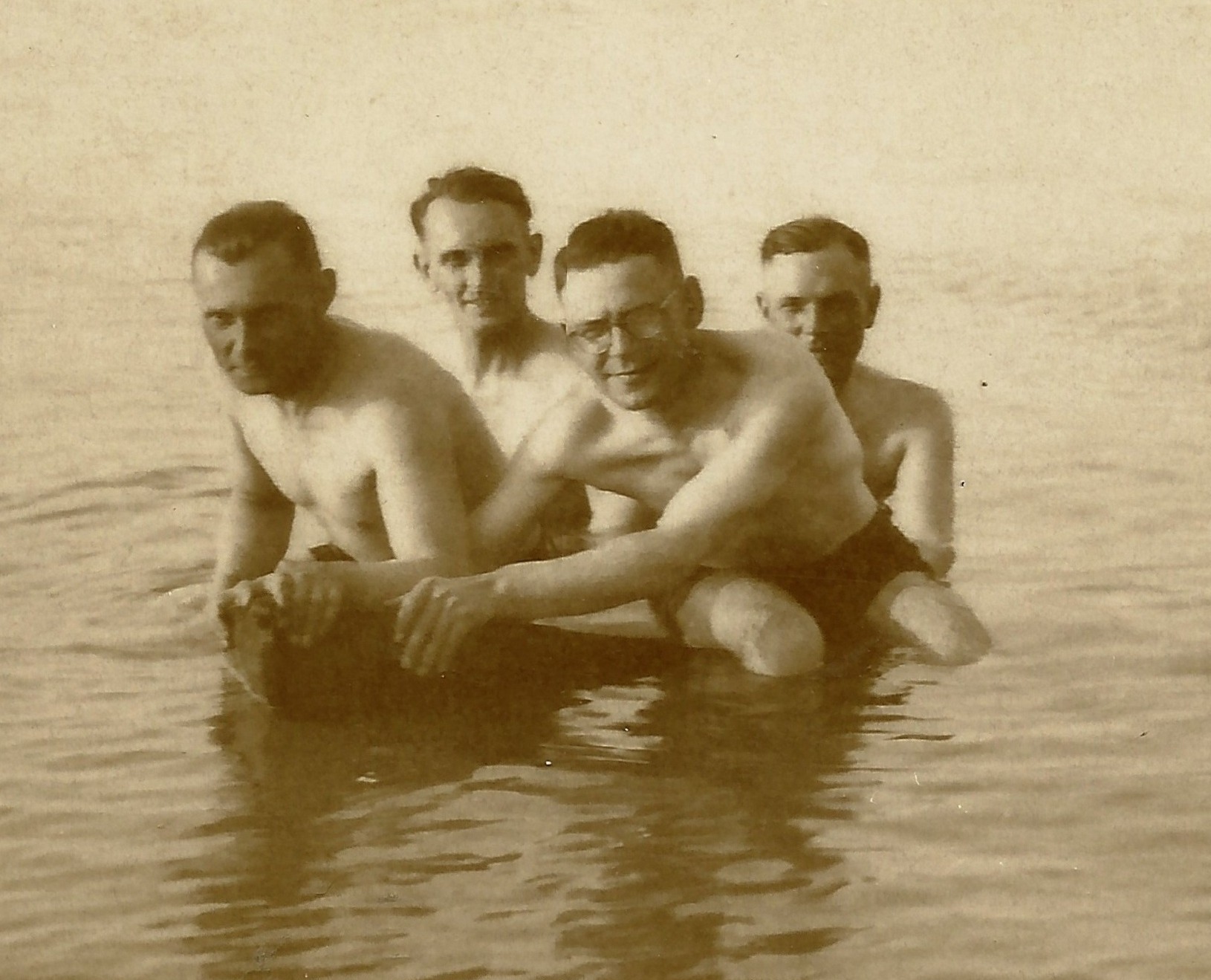
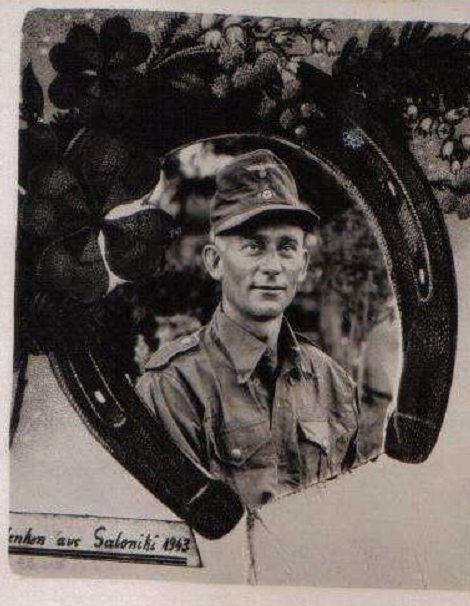
The unit arrived in Greece sometime end of June or probably early July 1943 – after a perilous and tiring train trip through the Balkans (see photo series from Lt. Gmelin further in this post), a relaxing dip in the sea by Thessaloniki must have been very welcome!

Hptmn. Mickler oder Michler, Stabartzt Dr. Knape, Lt. Preller und Lt. Henschel
7.7.1943 “Am Bad von Perea bei Saloniki” :
Hptmn. Mickler oder Michler, Stabartzt Dr. Knape, Lt. Preller und Lt. Henschel

Adendum, 25 August 2014 –

Traced another member of the Stab III./963 !!! Jan Bobrowski

Jan Bobrowski in Saloniki 1944. Courtesy of Bohdan Bobrowski

An exciting development! I found someone whose great-grandfather was in exactly the same unit as my grandfather after posting this partial list from the Staff of III. Bataillon of Afrika Schützen Regiment 963!  Doing a Google search of WWII pictures of the island of Lemnos I found the following photos posted by Bohdan Bobrowski on Flickr:

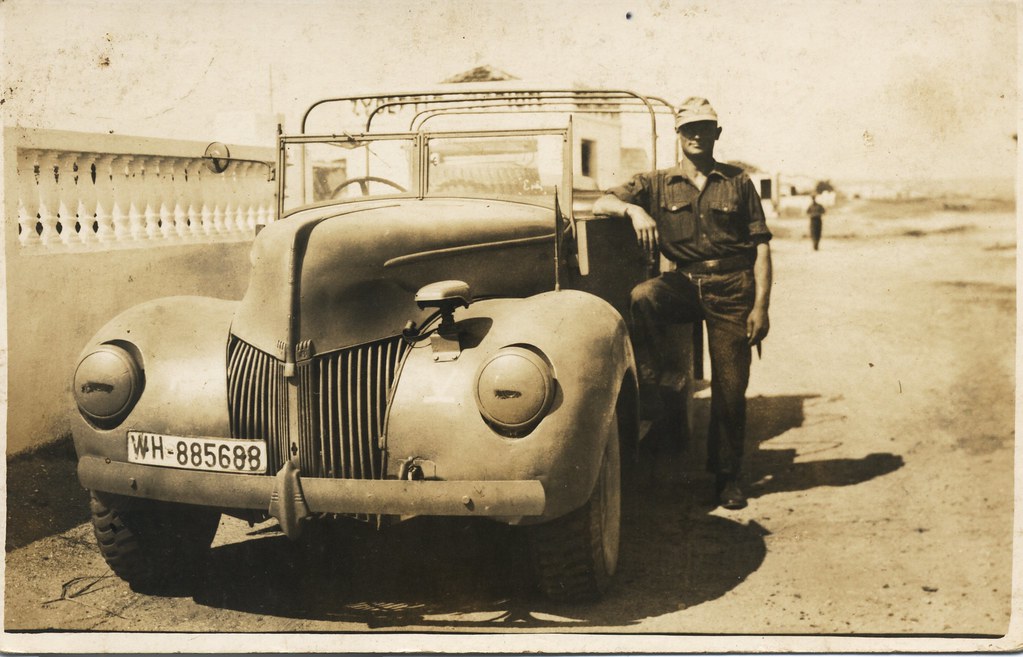
Jan Bobrowski, probably on Lemnos in 1944, next to the captured British Ford truck he drove. The tactical sign of the Leichte Afrika Division is visible through the glare on top of the radiator grid (right side on the picture). With permision from Bohdan Bobrowski.


As you can see from the list of members of staff published above there is a Schützen Bobrowski who appears precisely as a driver (1. Kraftwagenf. f. Pkw Schtz. Bobrowski : ‘First Driver for Personnel carrier/automobile’)… after connecting with Bohdan it is clear that his great-grandfather Jan Bobrowski is that same person! A fascinating – although sad story – too: Jan was Polish from Gdansk and forced into the Wehrmacht because his family was considered by the N.S. regime as of German descent (so called Volksdeutsche)!

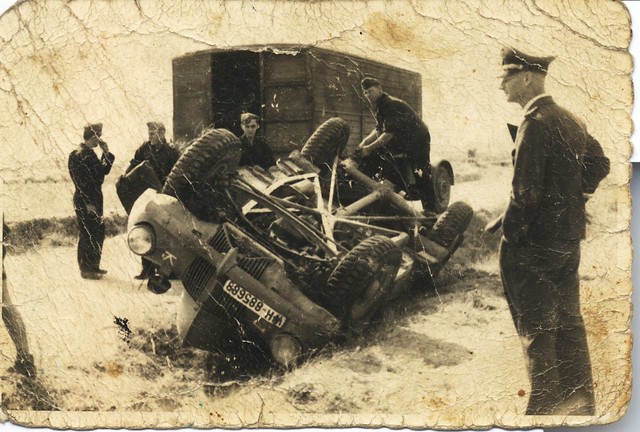
In Greece, probably in Lemnos based on the unit’s location at the time, he was forced by his commanding officer (a Hauptmann it seems, though we couldn’t establish the identity) to teach him how to drive the Ford WOC1 truck when drunk… a fatal accident resulted, the officer died, Jan survived. There was an enquiry into the accident and it seems some documents relating to this still exist in the military archives in Freiburg!

This discovery opens up new leads on possible other members of the unit!

The Ford truck after the fatal accident… survived by Jan Bobrowski, probably Lemnos 1944. The tactical sign of the Leichte Afrika Division is clearly visible (“V” with a horizontal bar below).

Jan Bobrowski was then involved in the difficult retreat through Yugoslavia end of 1944 and taken prisoner by Tito’s partisans (whereas my grandfather Lt Preller was sent back to Germany on home-leave before going back to the front in Hungary, where he went missing in March 1945). Jan survived the war and the harsh conditions of a Soviet POW-camp (as Tito’s partisans handed him over to the Red Army – rather than executing him as they did with some prisoners, probably thanks to the fact that he was Polish, not German). He then returned to communist Poland and lived until the mid-1970s. He had to deal with the stigma of having served under the Wehrmacht, although he had been forced to do so, and was pretty much a destroyed man according to post-war family memories.

Photo of another member of the unit found on Ebay! Using Ebay for family history research…

Initial image downloaded from Ebay – Scan of original image

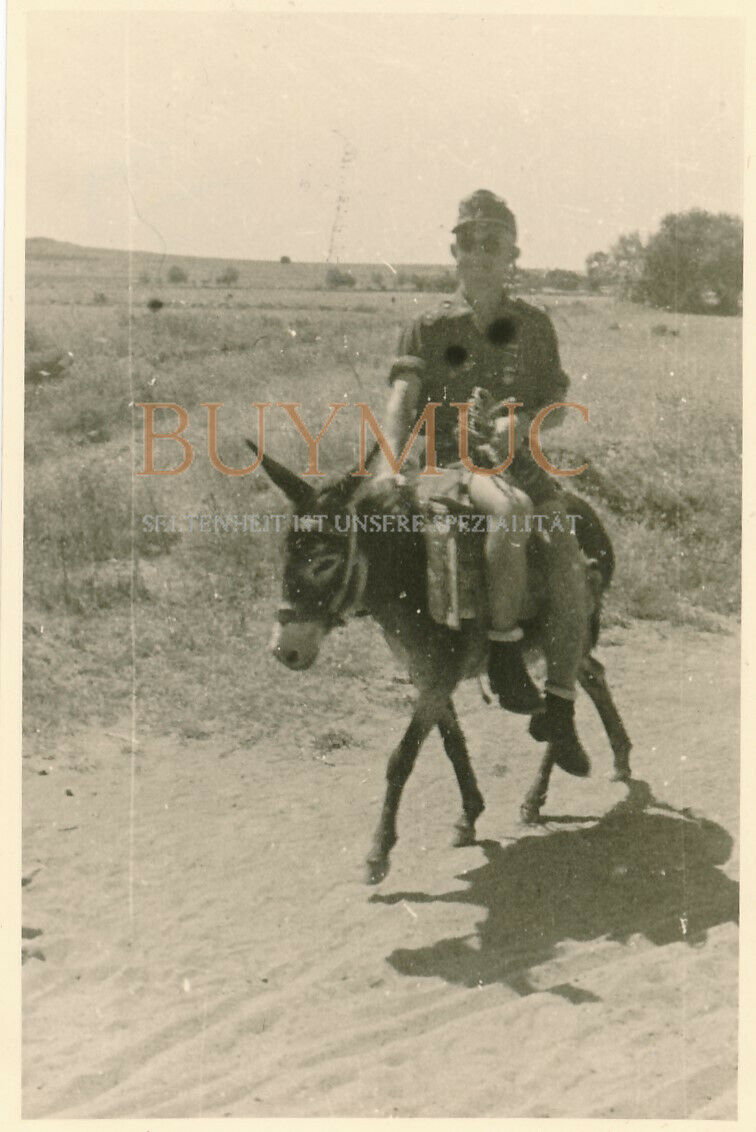
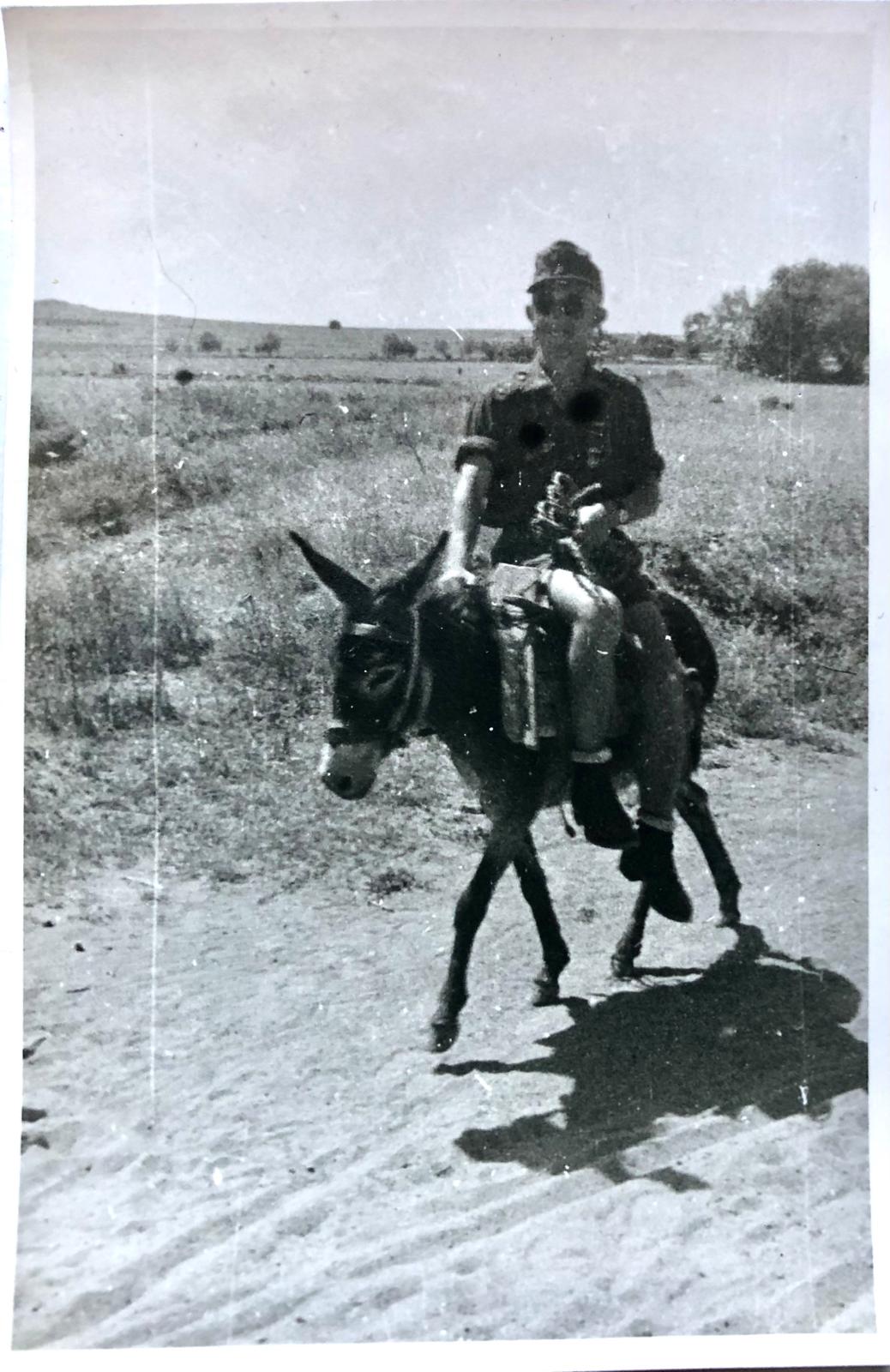
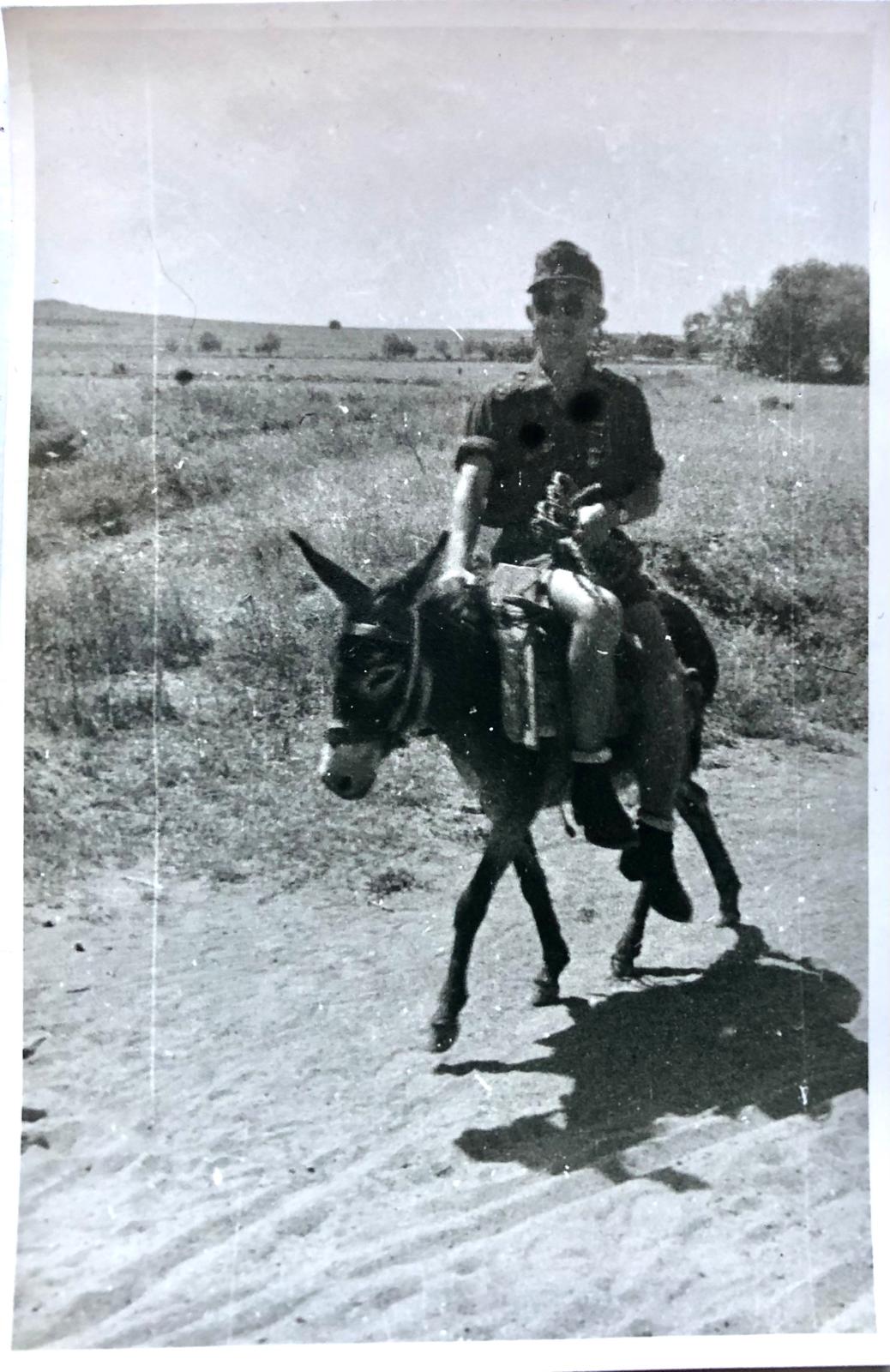
This is an interesting photograph of Ober-Feldwebel Maschke: so the more as Ofw (Ober-Feldwebel) Maschke appears in Leutnant Ludwig Preller’s (my grandfather) Planstellenbestzung as Zugführer (3. Zug) of the 9th Kompanie (Kompanie Trupp-Führer) for the III Bataillon of Afr. Schützen Regiment 963 !!! (and in a previous version as Kompanie Trupp-Führer for the 12. Kompanie of the III Bataillon of Afr. Schützen Regiment 963).

Ober-Feldwebel Maschke on the donkey in Kalliopi, Limnos 1943

More photos of the ASR 963 and their trip to Greece on Ebay!

A series of photos taken by a certain Leutnant Gmelin, advertised as “soldier of Afrika Schützen Regiment 963” (but probably from another batallion within the regiment) were recently sold on Ebay.de

They show the training camp of Heuberg and the trip through the Balkans (Zagreb, Belgrade, Skopje) and then Athens in July 1943, including the repression of a protest (allegedly a ‘communist uprising’ on 22 July according to the comments written by the officer).

ASR963 in Belgrad. Photograph from Leutnant Gmelin. His comment:
ASR963 in Serbia (near Belgrad?) Photograph from Leutnant Gmelin. His comment: “Kommandeur, Serbien”. 1943
Soldiers of the Afrika Schtz. Regiment 963 above Argos, (Peloponnese, Greece) - 1943.
Soldiers of the Afrika Schtz. Regiment 963 above Argos, (Peloponnese, Greece) – 1943. The man standing and pointing his finger is probably Lt. Gmelin. Click on image to enlarge.

Further images and info of soldiers from the V./999:

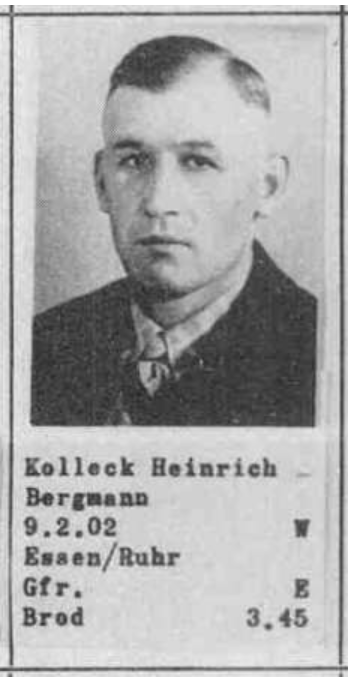
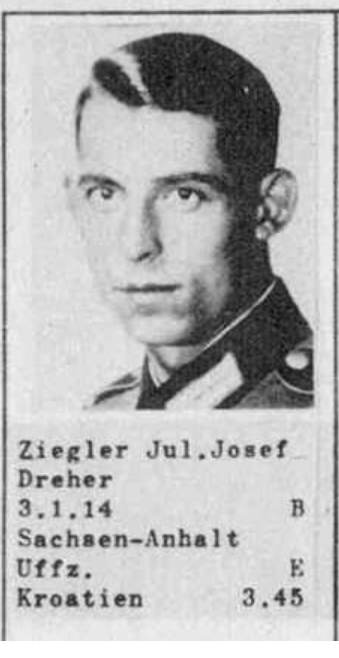
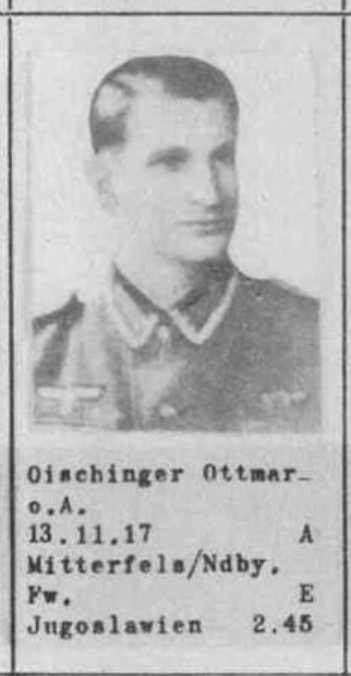
Soldiers listed in the German Red Cross missing persons’ registry also mentionned in Lt. Preller’s notebook.

Crossing the information from the lists in my grandfather’s notebook with the German Red Cross registers (Feldpostnummer 41 269, Band CG, Seite 36).

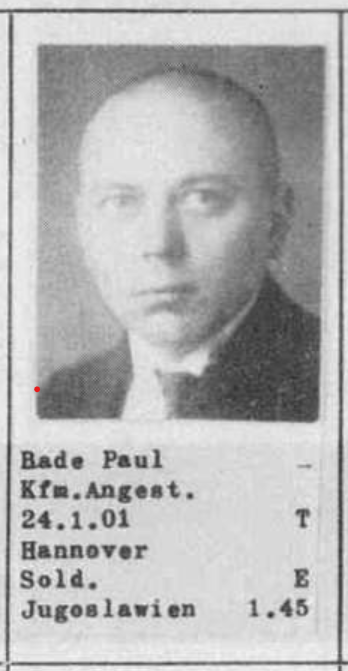
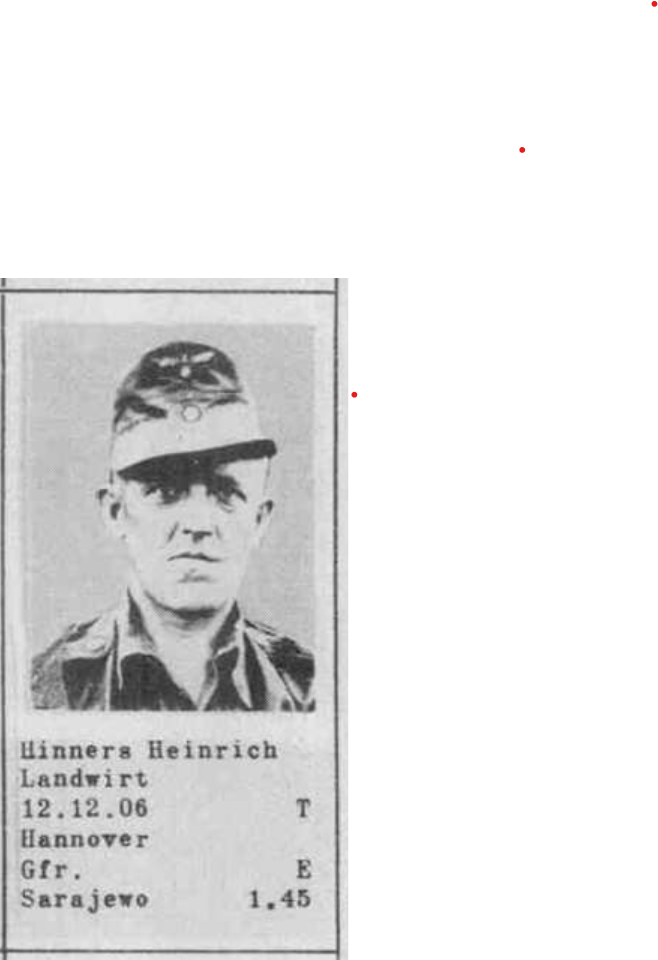
In that way, I was able to identify several soldiers mentioned by him in the detail of the units of III./963 (later V./999). As this is also a photographic register this allows the amazing progress of putting a face on some of the names, as well as completing first names and date and place of birth, as well as the date and place where they went missing or were killed in action (most of them in Yougoslava fighting their way back to Germany against Tito’s partisans in Croatia and Bosnia-Herzegovina).

Bade, Paul

Certa, Anton: Kfm. Angest. 24.4.14 T Lichtenau/Ostpr. Uffz. E Balkan 1.45

Leider ist für Anton Certa kein Bild vorhanden im DRK Register.

Hinners, Heinrich

Kolleck, Heinrich

Oischinger, Ottmar

Slojewski, Stefan – Kraftfahrer 15.12.03 W Duisburg Sold. E. 3.45

Leider ist für Stefan Slojewski kein Bild vorhanden im DRK Register.

Ziegler, Jul. Josef

… (WORK UNDER PROGRESS!)

Other members of III. ASR 963/ V. FIB 999

Karl Janich

1943 =10 Kompanie Afrika-Schützen-Regiment 963
1944(20.05.) =schwere Heeres-Flak-Batterie 418
1944(09.06.) 18.Kompanie Festungs-Infanerie-Bataillon 999

Source: Forum der Wehrmacht

Müller, Emanuel

Emmanuel Müller in Saloniki 1943 (July?). Source: Forum der Wehrmacht.
About the troops in “999” punitive bataillons and anti-occupation movement in Greece.

As mentioned above, the III Bataillon ASR 963 as other 999 punishment units initially destined to Africa were then send to Greece instead, where the first elements arrived in June or July 1943.

The file and rank soldiers of these units where either so-called common criminals (at least in the views of the NS regime) or political prisoners. The common version is that the proportion was about 1/3 political the rest ‘criminal’ but there can be some overlap between the categories. However in my grand-father’s statistics for III/963 it was closer to 50%/50%.
Now you have to imagine these ‘reformed’ solders among the political ones, many of whom communists and social-democrats, arriving in Athens in July 1943 and seeing the brutal repression of that demonstration as shown in some pictures from Leutnant Gmelin. The protest wasn’t a communist uprising as Lt. Gmelin’s comment in his album would have it. Although there were communists participating this was a non-violent demonstration by Greek citizens in general who were protesting against the German decision to give away the North of Greece to be annexed by Bulgaria. I am told by local historian Byron Tesaspsides that this mass demonstration gathered 400 000 people and is known to be the largest public protest to happen in occupied Europe. As a result the Germans withdrew from their plan! … but the repression was cruel, 30 people were shot, 200 injured and 500 arrested. One young woman, Panagiota Stathopoulou, an 18 year old student who stood fast in front of a tank was just run over by it.

Now think of those ex-political prisoners, some of whom were drawn directly out of concentration camps in to these “Bewaehrungs-Bataillone” witnessing this: no wonder quite a few of them then went over to the partisans! For some examples of 999 enrolled Wehrmacht soldiers joining the Greek resistance, see my post on Lemnos/Limnos island.

Here some retrieved links to some of the ebay-posts (with red “copyright” marks):

Belgrade train station:

thumbs4.picclick.com/d/l400/pi…Belgrad-Eisenbahn-Lok.jpg

An open air concert in Athens:

thumbs1.picclick.com/d/l400/pi…H-Konzert-Sommer-Oper.jpg

German soldier-tourist in front of an orthodox church in Athens:

thumbs3.picclick.com/d/l400/pi…e-Kirche-church-Athen.jpg

The German officers’ residence in Athens:

thumbs3.picclick.com/d/l400/pi…im-Athen-Griechenland.jpg

The start of a protest (in front of the university?) – described as an ‘ELAS uprising’:

thumbs3.picclick.com/d/l400/pi…AS-Athen-Griechenland.jpg

Members of the V. FIB 999 in the German resistance to the Nazi-regime

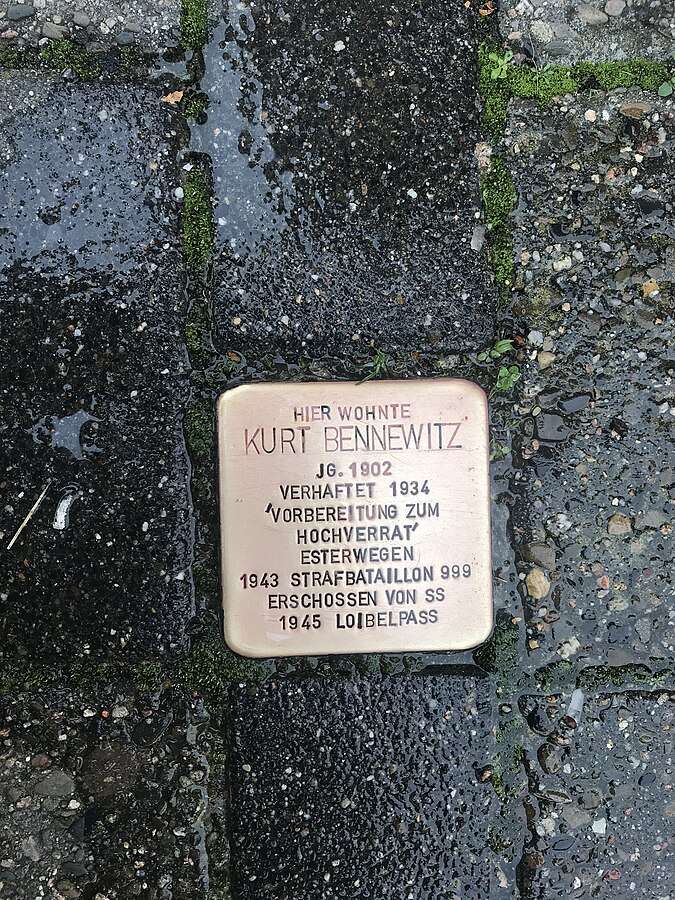
Kurt Bennewitz (shot by the SS in 1945)

“Stolperstein” in memory of Kurt Bennewitz in front of his home in Eilenburg. (Source: WikiCommons).

Bernhard Sühlbrandt : Communist, was also in V. FIB 999 and went over to ELAS Greek resistance, seen in 1st November 1944 liberation Parade in Thessaloniki, see photo below – copy from Hans-Peter Klausch, 1986, Die 999er. Sühlbrandt is the last one on the right of the picture.

More information on ASR 963 and 999 Units:

Some discussion – in German however – which  I initiated on the unit on the online research forum “Forum der Wehrmacht” can be found on this link here.

See more about “punitive units” or so-called “Straff-bataillon” (the official term being “Bewährungseinheiten”) at:

http://www.lexikon-der-wehrmacht.de/Gliederungen/Bewahrungseinheiten/5FIB999.htm

German war cemeteries in Greece (Deutsche Soldatenfriedhöfe in Griechenland):

Dyonissos-Rapendoza

Maleme/Crete

Field-Marshall Rommel’s visit to Thessaloniki (Saloniki), 25 July 1943 Video: http://en.saloniki.tv/?id=19061&tag=Visit+of+Rommel+in+Thessaloniki+%40+August+1943

and New York Times article about it at the time: https://www.nytimes.com/1943/08/02/archives/rommel-in-greece.html
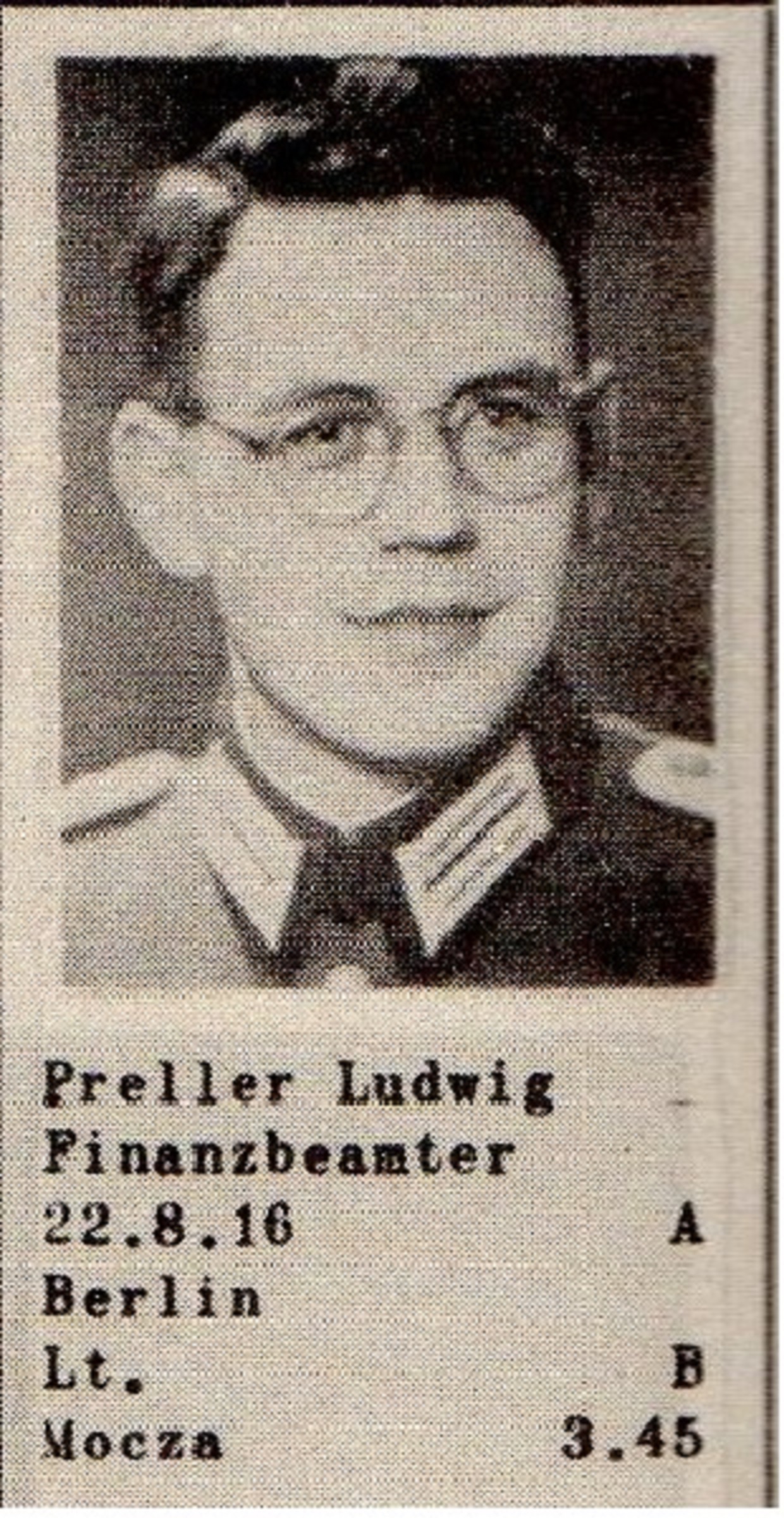
Missing in action – Grandfather Ludwig Preller

Ludwig Preller – Staff Officer Grenadier-Regiment 870
Ludwig Preller – Staff Officer Grenadier-Regiment 870. From the DRK (German Red Cross register). Note: Berlin is the place of residence in 1939

My German grandfather was reported missing in action a few weeks only before the end of the war, in Western Hungary (March 1945). Finding a relative missing in action during WWII – on any side of the conflict – is quite a challenge. All I knew from the family is that my grandmother had hoped for some time that he had survived his wounds sustained during a Soviet offensive and that he might have been taken into captivity. But a search with the German Red Cross (DRK) a few years after the war stayed fruitless. I present here some of the information obtained through the Deutsche Dienststelle/WaSt (Wehrmachts Auskunftstelle – Information service of the Wehrmacht established during the war) and the Volksbund Deutscher Kriegsgräberfürsorge (German war graves commission) together with some results from my own internet searches.

The DRK has him registered (follow link) as part of I. Bataillon of the 870. Grenadier Regiment, with the above photograph alongside those of other members of that batallion reported missing.

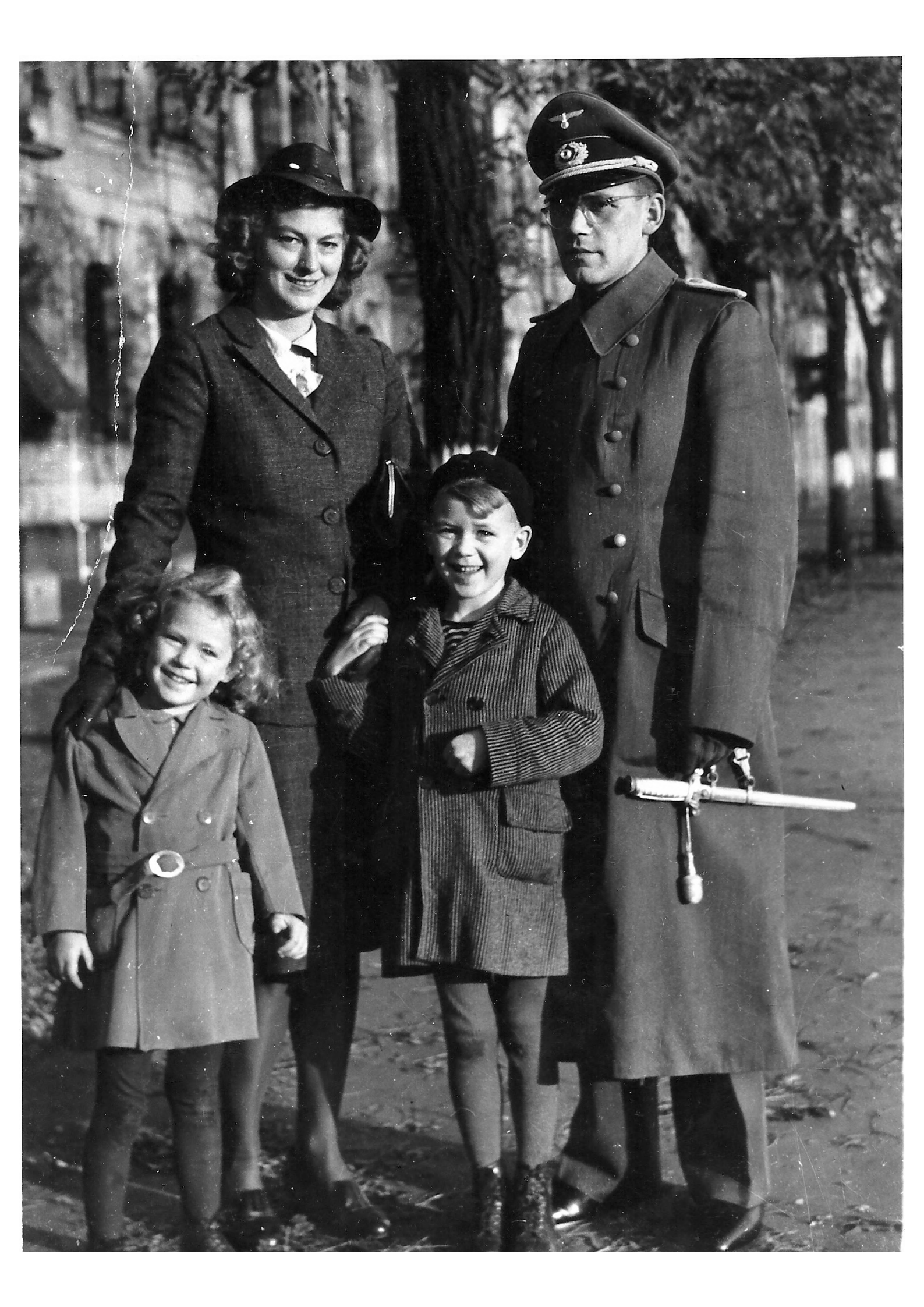
Last known photograph of Ludwig Preller. Here with family on his last permission from the front. October 1944, Hornschuh Promenade, Fürth, Bavaria.

He was last seen on a motorbike on his way to deliver a message to or from staff when he was heavily wounded. At the time he was serving in the Grenadier-Regiment 870 which belonged to the 356. Infanterie-Division. This division was positioned west of Székesfehérvár/Stuhlweißenburg, north of lake Balaton (Plattensee) in March 1945. Military action in this region in March 1945 was part of Hitler’s last ever offensive: Operation Frühlingserwachen (Spring Awakening). As was typical of Hitler’s suicidal drive and his vengeance on the German people and soldiers themselves in the final weeks of the war, casualties were massive and pointless. Many didn’t awake any more from this “Spring awakening”. My grandfather was one such victim.

In the WaST report, it says there has been no declaration of death or of him missing in action. However the Volksbund has him down in the memorial book of the Budaörs cemetery west of Budapest (http://www.volksbund.de/kriegsgraeberstaette/budaoers.html) as missing in action with the following personal details:

Nachname: Preller
Vorname: Ludwig
Dienstgrad: Hauptmann
Geburtsdatum: 22.08.1916
Geburtsort: Fürth/Bayern
Todes-/Vermisstendatum: 03.1945
Todes-/Vermisstenort: Ungarn westl. von Budapest

The location of Mocsa/Mocza mentioned on the photograph from the VBL (Vermissten Bild Liste of the German Red Cross) would be of the last place he would have been seen in action – so probably about where he was wounded.

Here a couple of links to maps of locations of: Székesfehérvár (German: Stuhlweißenburg) and Mocsa.

Bohdan Bobrowski, a relative of Jan Bobrowski who was a driver in the Stab of V. FIB 999 on Lemnos in 1944 (same unit my grandfather was in), recently visited the cemetary and sent photos of some of the graves of unidentified soldiers there.

Early Life and Military trajectory

Born in 1916, my grandfather grew up as an orphan in a religious institution, with his three brothers. He finished his Abitur (Highschool) in 1937 in his home town Fuerth (Northern-Bavaria or rather Franconia, as the family would usually specificy). This is where he had met Irmgard Puff (renamed Herrmann), in 1933 or earlier and whom he later married in 1938 after his Arbeitsdienst (Hitler’s “national work service”) and her Maedelsdienst time (the young women’s equivalent). He went through military training (1938-1939) in Wünsdorf training school near Berlin, where he was integrated into the Panzer-Lehr-Regiment (an unit that had participated in the Spanish Civil War, hence he got to wear the “Spanien-Armband” on his uniform, although he himself didn’t go to Spain (as far as we know). My grandmother Irmgard joined him there in Wünsdorf (near Berlin where part of the relative on her side, the Mahir branch of her mother’s family lived) and that’s where they married a few months before their first child, my late oncle Adolf († 2022) was born. The regiment’s officer apparently held the ceremony or at least signed the marriage certificate.

Waffenschule Wünsdorf - Credit: Larrister Collection.
Waffenschule Wünsdorf – Credit: Larrister Collection. (Click on image for full view)

Below, in German, the information of his military trajectory sent to me by the Deutsche Dienststelle/WaST service in 2012:

Ludwig Preller, geboren am 22 August 1916 in Fürth, Bayern

Dienseintritt: 04.11.1937
Erkennungsmarke: -130 – 8./Panz.Lehr-Rgt.
Dienstgrad: Leutnant
Hemeitanschrift: Ehefrau Irmgard Preller, Fürth, Tannenstr. 6

Truppenteile:
04.11.1937 14. Kompanie/Infanterie-Regiment 63
lt. Meldung v. 19.09.1940 8. Lehrkompanie/ Panzer-Lehr-Regiment
lt. Meldung v. 07.06.1941 4. Kompanie/Infanterie-Regiment (motorisiert 900)
16.12.1941 Genesenden-Kompanie/Panzer-Jäger-Ersatz-Abteilung 3
15.03.1942 Restkommando II./Panzer-Lehr-Regiment
03.09.1942 1. Kompanie/Panzer Grenadier-Ersatz-Bataillon 8
25.09.1942 Stamm-Kompanie/Panzer Grenadier-Ersatz-Bataillon 8
Abgang: 14.11.1942 zur Verfügungs-Kompanie 233
26.11.1942 Stamm-Kompanie/Panzer Grenadier-Ersatz-Bataillon 8
lt. Meldung v. 05.05.1943 Stab III./Afrika-Schützen-Regiment 963
27.07.1943 20. Kompanie/Festungs-Infanterie-Bataillon 999
lt. Meldung v. 02.10.1944 Stab V./ Festungs-Infanterie-Bataillon 999
20.11.1944 Stab/Feld-Ersatz-Bataillon 356
Zugang: v. Führer-Reserve-Heeresgruppe C
Abgang 11.12.1944 zum Grenadier-Regiment 870

Lazarettaufenthalte:
16.10.1941 in Malizkaja schwer verwundet;
an Haupt-Verband-Platz abgegeben,
17.10.1941 in Kriegslazarett 906 aufgenommen: Pistolenschuss-
Verletzung am linken Schulterblatt, (this field hospital was in Vitebsk, Belarus).
29.10.1941 verlegt ins Reserve-Lazarett Rastenburg,
08.11.1941 verlegt ins Reserve-Lazarett Wernigerode,
02.12.1941 dienstfähig- zur Truppe entlassen.

Eine Vermissten- bzw. Gefangenen- oder Todesmeldung liegt nicht vor.

Some links relating to locations in the above Laufbahn (trajectory):

About the Infanterie-Regiment (mot) 900: http://www.lexikon-der-wehrmacht.de/Gliederungen/Infanterieregimenter/IR900-R.htm

and about the battle of Wjasma (which is probably where Malizkaja lies, the place where Ludwig Preller was wounded): http://de.wikipedia.org/wiki/Doppelschlacht_bei_Wjasma_und_Brjansk

http://de.wikipedia.org/wiki/Doppelschlacht_bei_Wjasma_und_Brjansk

About the “Spring Awakening” offensive in the Ballaton area:

http://diepresse.com/home/zeitgeschichte/4680171/Fruhlingserwachen-1945_Hitlers-letzte-Offensive

Other related websites/links to find those killed or missing in action from Germany:

The missing persons photograph list of the German Red Cross (Vermissten Bildliste): https://www.drk-suchdienst.de/de/angebote/zweiter-weltkrieg/vermisstenbildlisten-%E2%80%93-online

http://www.wehrmacht-awards.com/forums/showthread.php?p=5395024

The German war graves commission’s search for missing soldiers link: https://www.volksbund.de/graebersuche.html

Map of the German invasion of USSR: http://upload.wikimedia.org/wikipedia/commons/1/15/Invasion1941.jpg (Credit: The Department of History, United States Military Academy)

Related articles

A Battle of the Bulge memorabilia: Recent German History in one bayonet!

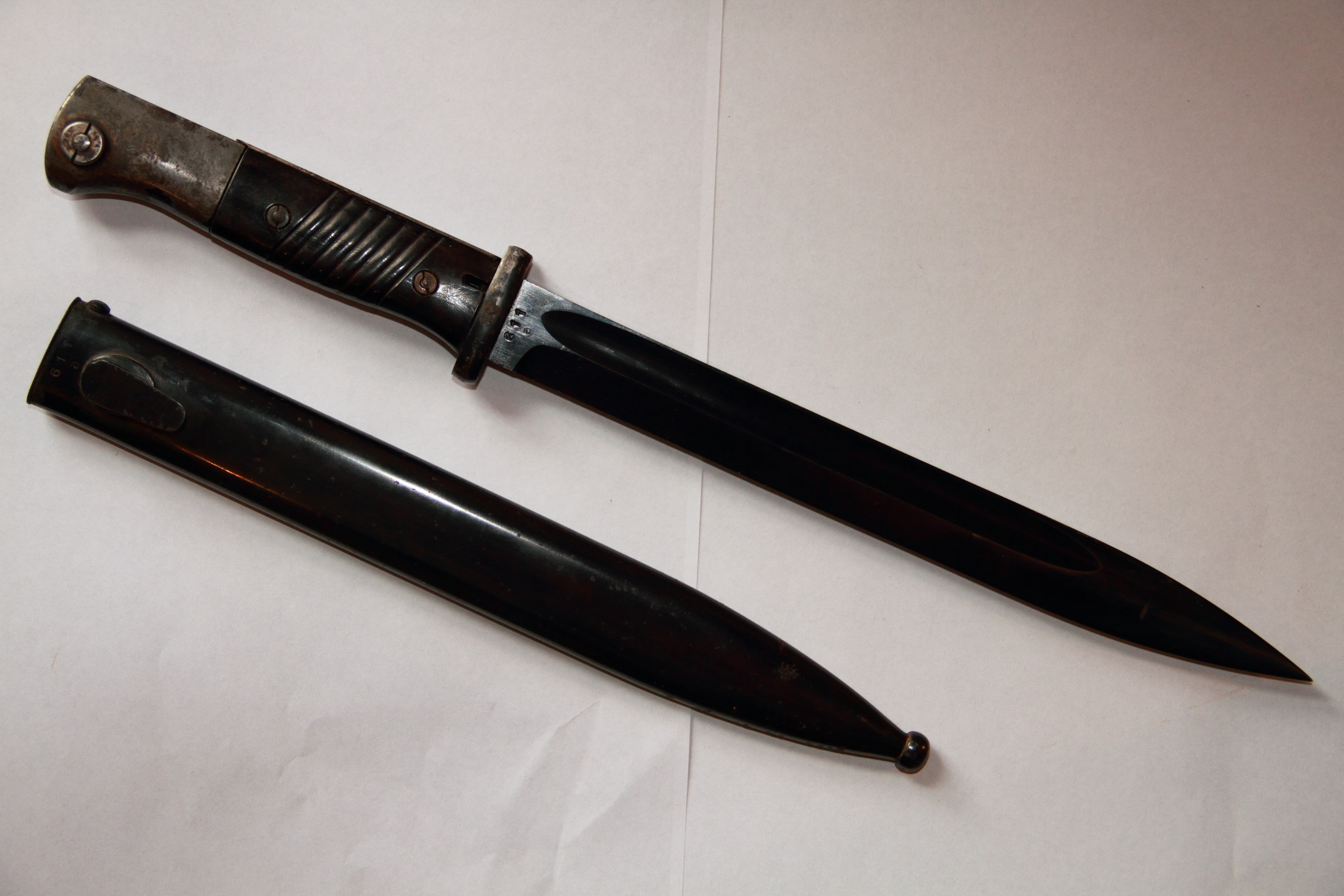
Bayonet and scabbardDPP_0016

Fred Tolles or “Uncle Fred”, who was drafted in the US army early 1942 following the Japanese attack on Pearl Harbor, brought this German bayonet back from his campaign in the Battle of the Bulge (Ardennes). This last German attack on the Western front (December 1944) was Hitler’s final offensive attempt of the war, aimed at throwing back the Western allies and re-taking the port of Antwerp and thus cut their vital supply lines. The idea was to win time to introduce and use the new “Wunderwaffen” (“miracle weapons”) on a massive scale, that is not only the V1 and V2 bomb-drones and missiles but also the recently introduced Me262, the first ever operational fighter-jet as well as further technological developments (like the rocket-propelled Me163 aircraft also operational by the end of the war). Luckily, the Ardennes offensive was eventually halted (after heavy losses on both sides) and all this new German war technology was too little, too late, for Germany to turn the tide of the war.

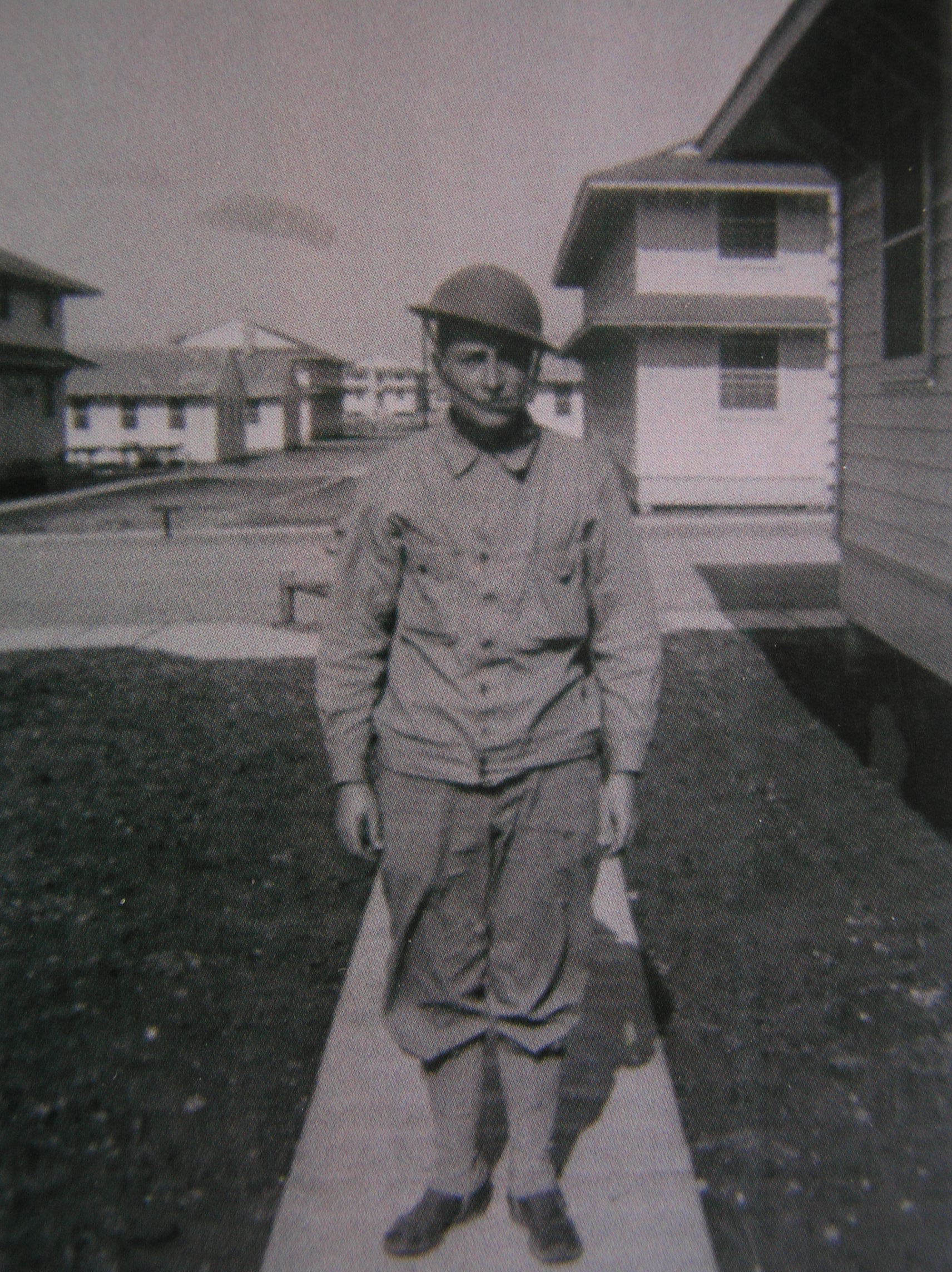
Fred Tolles, was a truck driver in the army and would probably have been bringing up troops and supplies or moving some of the heavy howitzers to stop the German advance from breaking out of the Ardennes.

Fred Tolles at training barracks in USA, early 1942

Fred Tolles at training barracks in USA, early 1942

Back to the bayonet.
Fred’s nephew, Claude Long, very kindly gave it to me. Not much more is known about uncle Fred’s time on the European front, and less even about exactly where and in which circumstances he picked up this war trophy.
However, objects can speak for themselves, to a certain extent, and tell us a further story.
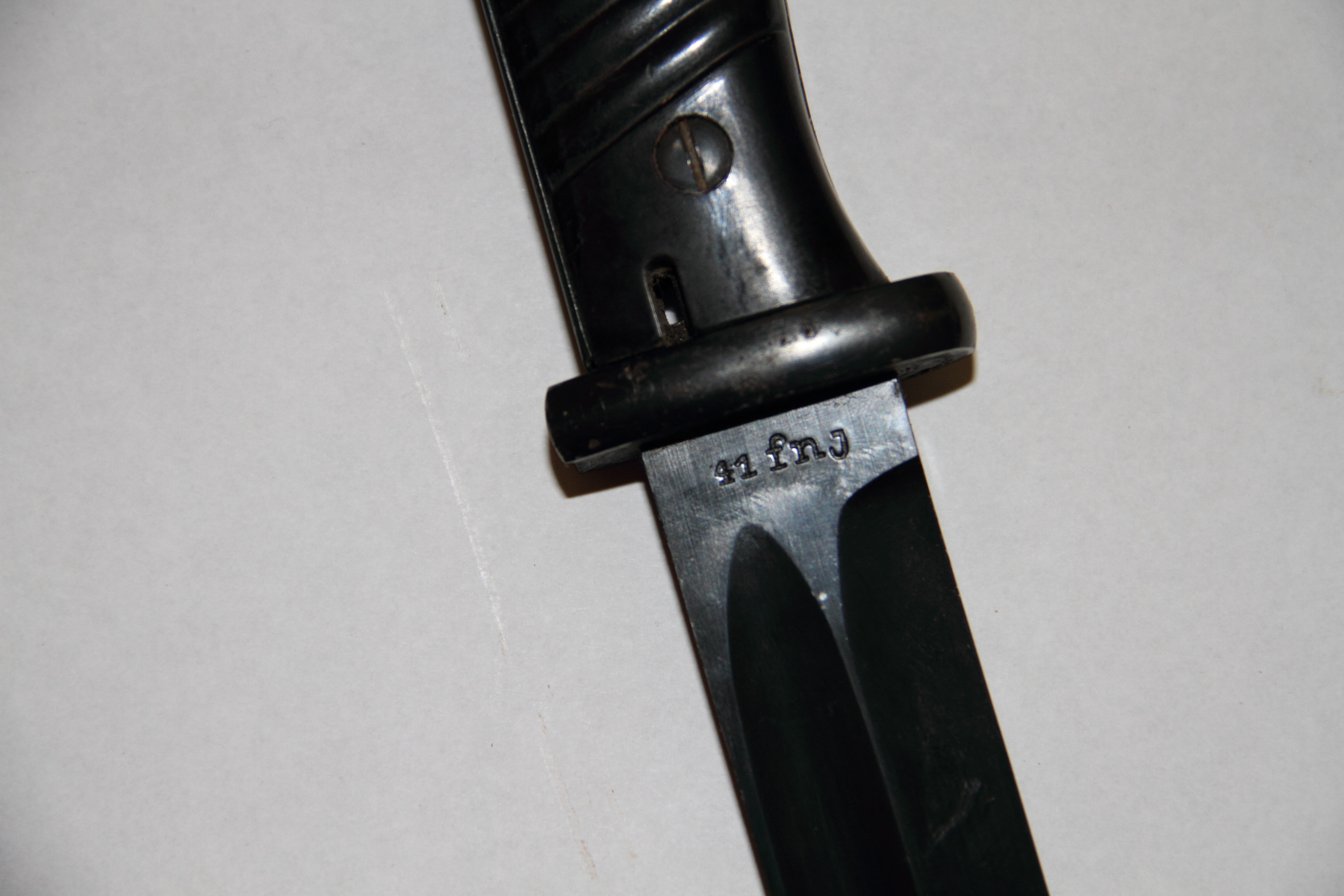
The markings on it tell us that it is a 1941 bayonet for the standard K98 Mauser rifle. In particular the “41 fnj” printed on the blade and on the scabbard indicate that is was made in 1941 by the Alex Copel factory in Solingen, a German town still known today for its good knives!
Now the tragic and dark irony of recent German history is that the Copel family owning the “Alex Coppel, Stahlware u. Waffenfabrik GmbH” which grew out of a family business founded in 1821 and produced many bayonets during both world wars, was Jewish!
In 1936 the firm was “arianised” – its legitimate owners expropriated although the factory’s name was apparently upheld! – and in 1942 Alex Copel and other family members were deported to Theresienstadt where he died within three weeks. That’s the Nazis gratitude for helping in Germany’s war effort!

Detailed description of the bayonet and its markings (click on images for close view):

This early war bayonet is of the the higher quality fabrication. Late war bayonets were made more crudely and are known as ‘Ersatz’-bayonets. Like others this early model reveals a fascinating multiplication of stamps/markings associated to the quality controls both from the maker and from the Waffenamt, the local military procurement agency.

Year decimals and maker's mark on blade ricasso

Year decimals and maker’s mark on blade ricasso

Scabbard's frog stud with '611 a' mark on scabbard

Scabbard’s frog stud with ‘611 a’ mark on scabbard

'WaA833' stamp on the pommel identifies the Waffenamt 833 (German weapons agency) located in Solingen.

‘WaA883’ stamp on the pommel identifies the Waffenamt 883 (German weapons agency) located in Solingen.

Dismantling the handle reveals more information, like the fabrication number '2025' and...

Dismantling the handle reveals more information, like the fabrication number ‘2025’ and…

Inner side of bakelite handle plate reveals more markings

Inner side of bakelite handle plate reveals more markings

... reveals a different version with full German-NS eagle with Swastika rather than just the stylised lines above the 'WaA883' code!

… including a different version of the Waffenamt stamp with full German-NS eagle with Swastika rather than just the stylised lines above the ‘WaA883’ code! (click on image for close-up)

Some links:
http://worldbayonets.com/Bayonet_Identification_Guide/Germany__Post_WW_I_/Germany_1933_1945.html#TopPage
http://www.quanonline.com/military/military_reference/german/blades/army/k98.php
http://de.wikipedia.org/wiki/Alexander_Coppel

http://en.wikipedia.org/wiki/Waffenamt_codes